A refill station is often only noticed when pressure drops, an error occurs, or make-up water is needed after a repair. For operators of new district heating systems, this is thinking too late. Commissioning determines whether the system will operate from the outset with a robust water quality concept or if every subsequent refill introduces a new risk into the circuit.
This is precisely where the strategic gap lies: many resources explain how heating water is treated, filled, or refilled. This article considers the refill station as an integral part of the commissioning process. This shifts the perspective from a standalone product to operator logic: What water quality is required? Who documents it? How is drinking water protected? How are resin changes, measured values, make-up water quantities, and deviations made traceable? And how can it be prevented that a new district heating system is compromised in its first months of operation by unsuitable make-up water?
A refill station is the technical unit through which missing water is controlled, secured, and introduced in a defined quality into a heating, local heating, or district heating system. In simple cases, it replaces water losses. In professional district heating operation, it does significantly more: it protects the drinking water network, treats make-up water, limits the salt load, makes make-up water quantities visible, and creates a documentable interface between raw water, treatment, and the heating network.
This is crucial for a new district heating system. The initial filling establishes the baseline condition. The refill station then determines whether this condition is maintained. Any unverified refilling can introduce hardness, oxygen, chloride, sulfate, carbon dioxide, or other undesirable components into the circuit. At high temperatures, with large system volumes, long pipe networks, and sensitive heat exchangers, small chemical deviations are sufficient to promote corrosion, magnetite formation, deposits, or malfunctions.
A heating water refill station is therefore not only relevant for classic building heating systems. It is also important for district heating substations, neighborhood networks, hospitals, industrial areas, heat storage units, energy centers, and hybrid networks. The larger the system, the more critical flow rate, resin capacity, system separation, measurement concept, and serviceability become.
In new district heating systems, much attention is paid to heat generators, storage tanks, pumps, control systems, transfer stations, and pipelines. Water quality, however, often seems like a secondary consideration. In practice, it is a critical commissioning criterion.
A new system is particularly vulnerable during the construction phase. Pipelines are installed, flushed, tested, sometimes reopened, extended, and refilled. Particles, welding residues, sealants, assembly aids, oxygen, and foreign water can be introduced. If refilling then occurs without a clear concept, it becomes difficult to maintain the defined initial state.
The refill station should therefore be considered already in the planning and commissioning phase. It answers four central questions:
These questions are not just technical. They concern operator responsibility, warranty, auditability, and total operating costs. A system that shows high makeup water volumes in its first year of operation may have a leak, a pressure maintenance problem, incorrectly set degassing, or unsuitable operating parameters. Without a makeup water station with measurement and documentation logic, this often remains undetected for too long.
Anyone integrating a makeup water station into a new district heating system must consider various regulations in conjunction. It is important to remember: One standard does not automatically replace another. The specific application depends on whether it concerns the district heating network, a house station, a secondary heating circuit, potable water protection, or the commissioning of a building heating system.
For district heating and industrial hot water systems, AGFW FW 510 is a key regulatory framework. It addresses requirements for circulating water and makeup water and aims to prevent water chemistry-related disturbances. These include, in particular, scale formation, corrosion, deposits, magnetite formation, oxygen ingress, and unsuitable operating conditions.
For the makeup water station, this means: It must be designed so that the makeup water matches the required operating mode. A low-salt operating mode places different demands than a conditioned saline operating mode. Conductivity, pH value, hardness, oxygen, and, if applicable, additives must be evaluated in combination.
For the specific topic of makeup water stations, AGFW FW 532 is particularly relevant because it explicitly deals with initial filling and makeup equipment in district heating stations. This moves the makeup water station from the category "accessories" into the category "technical interface of the district heating station".
For operators and planners, this means: The selection of the makeup water station should not be based solely on connection size or price. Crucial factors are integration, protective function, backflow prevention, treatment capacity, usability, maintainability, and documentation.
VDI 2035 is primarily authoritative for hot water heating systems. It is particularly relevant for secondary heating circuits, connected building systems, domestic and building services, and many handover situations. In district heating projects, there is often an interface between the primary district heating network and the secondary heating system. Precisely at this point, it must be clarified which side is evaluated according to AGFW requirements and which side according to VDI logic.
A makeup water station for heating water must therefore be designed on a project-specific basis. In a district network, a hospital, or an industrial area, there can be several circuits: primary network, secondary network, buffer storage, heating circuit distributor, process heat circuit, domestic hot water preparation, and, if applicable, emergency or redundancy systems. Not every circuit has the same water chemistry.
As soon as a refill station is connected to the drinking water installation, protection against backflow, back pressure, and back siphonage must be considered. Heating water is not drinking water. Depending on its composition, it is classified into risk categories. Without suitable safety devices, no direct connection may be established.
In practice, this means: A refill station with a system disconnector is in many cases the appropriate basic design, especially when drinking water is used for filling or refilling. In cases of higher risks, for example due to additives, inhibitors, or special hygienic requirements, more extensive system separation may be necessary. The specific design must be coordinated with planning, the operator, drinking water hygiene experts, and recognized technical standards.
For hot water heating systems, DIN EN 14336 is relevant because it structures installation, acceptance, commissioning, testing, flushing, documentation, and handover. For district heating projects, it is particularly important when considering building heating circuits, secondary systems, or connected hot water heating systems.
For the refill station, this leads to a practical point: It must not simply be operated 'somehow' only after handover. It must be included in the commissioning documentation, operating instructions, and maintenance planning. This includes operation, inspection intervals, resin exchange, measuring points, setpoints, limit values, responsibilities, and response procedures for deviations.
For refill stations in Saxony, essentially the same core technical regulations apply as in other federal states: AGFW FW 510 for water quality in district heating systems, AGFW FW 532 for initial filling and refilling devices in district heating stations, VDI 2035 for relevant hot water heating systems and secondary circuits, DIN EN 1717 with DIN 1988-100 for the protection of drinking water installations, and DIN EN 14336 for installation, testing, and commissioning in the building context.
The location in Saxony therefore does not change the chemistry of the heating water. However, it can influence project implementation. Additionally, crucial factors include the technical connection conditions of the district heating supplier, operator specifications, manufacturer requirements, building requirements, drinking water hygiene, occupational safety, documentation obligations, and, if applicable, municipal or object-specific requirements.
For an operator in Leipzig, Dresden, Chemnitz, or a Saxon industrial area, this means: The refill station should already be defined in the requirements specification. These include:
This preparatory work is crucial, especially for new district heating systems in expanding heat networks. If the system is expanded later, the refill station must not become a bottleneck.

Many warranty and guarantee issues do not arise because water treatment was not planned. They arise because the concept is not consistent. The initial filling is carried out according to standards, but subsequent refilling occurs via a different method. Or the refill station is installed, but no one checks resin capacity, measured values, and refill quantities. Or the documentation ends with the commissioning protocol, even though the operator regularly adds make-up water afterwards.
The most common errors are easily avoidable.
A district heating system can be filled with high-quality, fully demineralized water. However, if make-up water without appropriate treatment flows in afterwards, the water quality will gradually deteriorate. This is precisely why the refill station must meet the same quality standards as the initial filling.
The right question is not: "How do we fill the system once?" The right question is: "How do we maintain water quality throughout its entire lifecycle?"
The refill point must match the pressure maintenance, system design, and measurement logic. If refilling occurs at an unfavorable location, measured values can be distorted, partial circuits inadequately monitored, or flow conditions worsened. In complex district heating systems, the position of the refill station should be coordinated with pressure maintenance, degassing, filtration, and water treatment.
The system disconnector is not an optional convenience component. It protects the drinking water installation from backflow of heating or district heating water. If planning is incorrect here, hygienic, legal, and insurance-related risks arise. In sensitive buildings such as hospitals, care facilities, laboratories, or public institutions, drinking water protection should be assessed particularly conservatively.
Conductivity is temperature-dependent. pH value and oxygen content are sensitive to sampling, air contact, and measurement method. Anyone who only occasionally records a value does not get a reliable operational statement. For operators, not just the individual measured value matters, but the trend: How much was refilled? How quickly does conductivity rise? When was resin changed? What deviation was detected? What action was taken?
A refill station is only as reliable as its treatment medium. For mixed-bed or demineralization cartridges, capacity depends on raw water quality, target value, flow rate, temperature, and operating mode. If a cartridge is undersized, service effort increases. If a resin change is detected too late, water of unsuitable quality enters the circuit.
Therefore, a clear resin and regeneration logic is important for operators. Reusable resin can offer a double advantage here: it supports sustainability goals and creates a traceable operational structure through batches, regeneration, and service.
The decision "with or without system disconnector" should not be made generally based on the product catalog. It depends on the integration. As soon as there is a connection to the drinking water installation, backflow must be reliably prevented. A refill station without a system disconnector can only be justifiable if the required system separation is already present on-site or if there is no direct connection to the drinking water installation.
For many projects, a refill station with an integrated system disconnector is the safer and more easily documented solution. It reduces interfaces, simplifies acceptance, and makes it clear to operators where the protective function is located.
For hospitals in Brandenburg or other federal states, it's not just about district heating, but also about supply security, drinking water hygiene, documentation, operator obligations, and preventing failures. Therefore, a refill station for a hospital should always be planned with particular care.
The question isn't: "Is Brandenburg stricter than other federal states?" The better question is: "What risks arise from the specific system?" A hospital has high demands for availability and hygiene. If the refill station is connected to the drinking water installation, an appropriate backflow prevention device is required. If the heating water contains additives or the risk is assessed as higher, a simple safeguard may not be sufficient. In such cases, it must be assessed on a project-by-project basis whether a Type BA system disconnector is adequate or if more extensive separation is necessary.
Redundancy is also important for hospitals. A refill station should be planned so that resin changes, maintenance, or malfunctions do not immediately jeopardize operations. This can be ensured through spare cartridges, bypass options, mobile treatment, documented emergency procedures, or a temporary trailer solution.
A refill station must fit the project. A different solution is needed for a small domestic station than for a district network, a hospital campus, a heat storage facility, or an industrial district heating integration.
The starting point is not the device size, but the required water quality. The following need to be clarified:
Only once these questions have been answered can the refill station be designed effectively.
The refill station must match the expected refill volume. In a sealed, well-operated system, refill volumes are low. However, significantly higher volumes can occur during commissioning, pressure testing, flushing, expansion, or malfunctions. For the initial filling of large district heating systems, a stationary refill station may be too small. In such cases, a mobile solution is advisable, while the stationary refill station later handles regular operation.
The capacity of a demineralization unit heavily depends on the raw water. High conductivity, high hardness, high salinity, or unfavorable anion profiles can deplete resin more quickly. Therefore, raw water analysis should be available not only for the initial filling but also for subsequent refilling. If the water source changes or a mobile connection is used, a new assessment is necessary.
Der Schutz der Trinkwasserinstallation muss in die technische Planung. Dazu gehören Einbaulage, Zugänglichkeit, Wartbarkeit, Ablauf, Entwässerung, Frostschutz, Druckverhältnisse und klare Kennzeichnung. Bei Fernwärmestationen, Krankenhäusern und öffentlichen Gebäuden sollte die Sicherungseinrichtung nicht improvisiert werden.
Eine Nachfüllstation sollte nicht nur Wasser liefern, sondern Betriebstransparenz schaffen. Sinnvoll sind Wasserzähler, Leitfähigkeitsmessung, Probenahmestelle, dokumentierter Harzwechsel, Wartungsnachweis und definierte Grenzwerte. Je kritischer die Anlage, desto wichtiger wird eine kontinuierliche oder engmaschige Überwachung.
Bei Entsalzungspatronen oder Mischbettsystemen muss klar sein, wann das Harz erschöpft ist, wie der Wechsel erfolgt, wer ihn ausführt und wie das erschöpfte Harz weiterbehandelt wird. Regenerierbare Mehrwegharze reduzieren Einwegabfälle und unterstützen eine Gesamtbetriebskosten-Betrachtung, weil Beschaffung, Entsorgung, Logistik und Nachhaltigkeit gemeinsam bewertet werden.
Neue Fernwärmeanlagen wachsen häufig. Ein Quartier wird erweitert, ein Speicher kommt hinzu, ein zusätzlicher Wärmeerzeuger wird eingebunden oder eine Klinik baut einen neuen Gebäudetrakt. Die Nachfüllstation sollte deshalb nicht nur für den ersten Bauabschnitt passen. Anschlussreserven, mobile Ergänzungsmöglichkeiten und eine klare Skalierungslogik vermeiden spätere Umbauten.
Hamburg ist ein gutes Beispiel für Fernwärmeprojekte mit hoher Komplexität. Dichte Bebauung, begrenzte Aufstellflächen, hohe Versorgungserwartungen, Bestandsnetze, Neubauquartiere, Klinikstandorte, Gewerbeareale und Dekarbonisierungsprojekte treffen auf enge Zeitfenster. Eine Nachfüllstation für Fernwärme muss hier vor allem drei Dinge leisten: planbare Wasserqualität, sichere Systemtrennung und eine robuste Dokumentation.
Für die Inbetriebnahme in Hamburg empfiehlt sich eine klare Schrittfolge.
Zuerst wird definiert, welche Kreise die Nachfüllstation versorgt. Geht es um eine einzelne Hausstation, ein sekundäres Heizwassernetz, ein Nahwärmenetz, einen Speicher oder mehrere Gebäudekreise? Je sauberer die Systemgrenze, desto weniger Streit entsteht später über Messwerte, Zuständigkeiten und Gewährleistung.
Vor der Auslegung werden Rohwasser und Zielqualität analysiert. Die Zielwerte müssen zu Regelwerk, Werkstoffen, Herstelleranforderungen und Betriebsweise passen. Bei Fernwärmeprojekten kann es sinnvoll sein, Erstbefüllung, Spülung, Entsalzung, Filtration und Nachspeisung getrennt zu betrachten.
Für große Volumen ist eine mobile Aufbereitung oder Trailer-Lösung oft wirtschaftlicher und schneller als eine kleine stationäre Nachfüllstation. Die stationäre Nachfüllstation übernimmt danach den Regelbetrieb. Das verhindert, dass ein Gerät für die seltene Erstbefüllung überdimensioniert wird oder im Regelbetrieb unwirtschaftlich arbeitet.
Vor der ersten Befüllung müssen Systemtrennung, Einbaulage, Absperrungen, Ablauf, Probenahme, Messgeräte und Druckverhältnisse geprüft werden. Dabei sollte nicht nur die mechanische Installation betrachtet werden, sondern auch die spätere Bedienbarkeit: Kommt das Wartungspersonal an Patrone, Filter, Messstelle und Wasserzähler heran?
Die Inbetriebnahme sollte nicht als reine „Wasser rein“-Phase verstanden werden. Spülen, Filtrieren, Entgasen, Befüllen, Probenahme und Dokumentation gehören zusammen. Wenn Magnetit, Partikel oder Montageverunreinigungen im System verbleiben, kann selbst korrekt aufbereitetes Ergänzungswasser die späteren Probleme nicht verhindern.
Nach der Inbetriebnahme sollte der Betreiber die ersten Wochen eng beobachten. Auffällig sind steigende Nachspeisemengen, Leitfähigkeitsanstieg, instabiler pH-Wert, häufige Harzwechsel oder Druckschwankungen. Diese Signale sollten nicht als normales Einregelverhalten abgetan werden. Sie zeigen oft, dass hydraulisch, chemisch oder mechanisch nachjustiert werden muss.
Ein Betriebs- und Wartungskonzept muss so geschrieben sein, dass es im Alltag funktioniert. Es darf nicht nur aus Herstellerunterlagen bestehen. Es muss die konkrete Anlage abbilden.
Das Konzept beginnt mit einer kurzen Beschreibung der Nachfüllstation. Dazu gehören Standort, versorgte Kreise, Wasserquelle, Aufbereitungsverfahren, Systemtrennung, maximale Durchflussleistung, Messgeräte, Probenahmestellen, Harztyp, Filter und Einbindung in Druckhaltung oder Leittechnik.
Wichtig ist eine klare Aussage, welche Kreise nicht über diese Nachfüllstation versorgt werden dürfen. Viele Fehler entstehen, weil eine Nachfüllstation später für einen anderen Zweck genutzt wird als ursprünglich geplant.
Das Konzept muss festlegen, welche Werte im Regelbetrieb gelten. Dazu gehören mindestens Leitfähigkeit, pH-Wert, Härte beziehungsweise Erdalkalien und Nachspeisemenge. Je nach Anlage kommen Sauerstoff, Chlorid, Sulfat, Eisen, Kupfer, Temperatur und Zusatzstoffkonzentration hinzu.
Neben Sollwerten braucht es Eingriffsgrenzen. Eine Eingriffsgrenze beschreibt, wann gehandelt wird. Beispiel: Wenn die Leitfähigkeit hinter der Patrone steigt, wird Harzwechsel vorbereitet. Wenn die Nachspeisemenge pro Woche deutlich zunimmt, wird eine Leckage- oder Druckhalteprüfung ausgelöst. Wenn der pH-Wert außerhalb des Zielbereichs liegt, wird die Ursache analysiert, bevor Chemikalien ergänzt werden.
Der Messplan legt fest, was wann und von wem gemessen wird. Für die Inbetriebnahme sind engere Intervalle sinnvoll als im stabilen Regelbetrieb. Nach Umbauten, Reparaturen, Wasserverlusten oder Harzwechseln sollte zusätzlich geprüft werden.
Die Probenahme muss reproduzierbar sein. Probenahmestelle, Spülzeit, Gefäß, Temperatur, Messgerät, Kalibrierstatus und Dokumentationsform beeinflussen die Aussagekraft. Gerade pH-Wert und Sauerstoff können durch falsche Probenahme verfälscht werden.
Zur Wartung gehören Systemtrenner, Rückflussverhinderer, Filter, Magnetitabscheider, Wasserzähler, Leitfähigkeitsmessgerät, Druckminderer, Absperrungen, Schläuche, Dichtungen und Harzpatronen. Bei stationären Systemen kommt die Steuerung hinzu. Bei intelligenten Systemen müssen Alarme, Sensoren und Datenlogger geprüft werden.
Der Wartungsplan sollte klar regeln:
Bei regenerierbarem Harz sollte der Prozess von Anfang an festgelegt werden. Erschöpftes Harz wird nicht anonym entsorgt, sondern gesammelt, regeneriert und wieder eingesetzt. Für Betreiber ist das interessant, weil Nachhaltigkeit, Kostenlogik und Nachvollziehbarkeit zusammenkommen. Chargen, Wechseltermine, Kapazitätsverlauf und Einsatzort sollten dokumentiert werden.
Ein auditfähiges Konzept enthält Inbetriebnahmeprotokolle, Wasseranalysen, Messwerte, Harzwechsel, Wartungsnachweise, Abweichungen, Korrekturmaßnahmen und Verantwortlichkeiten. Bei kritischen Anlagen sollte die Dokumentation so aufgebaut sein, dass sie auch nach Jahren noch verständlich ist. Wer später eine Gewährleistungsfrage, einen Versicherungsfall oder eine Revision bewertet, braucht keine schönen Formulierungen. Er braucht belastbare Nachweise.
Die Anschaffungskosten einer Nachfüllstation sind nur ein Teil der Wirtschaftlichkeit. Entscheidend sind die Gesamtkosten über den Betrieb. Dazu zählen Harzverbrauch, Wartung, Messaufwand, Ausfallrisiko, Nachspeiseverluste, Dokumentationsaufwand, Gewährleistungsrisiko und mögliche Schäden durch Korrosion oder Ablagerungen.
Eine zu einfache Nachfüllstation kann auf den ersten Blick günstig wirken. Wenn sie aber keine ausreichende Messlogik, keine passende Systemtrennung, keine nachhaltige Harzlösung oder keine klare Wartungsstrategie bietet, entstehen die Kosten später. Im Fernwärmebetrieb sind spätere Kosten oft deutlich höher als die Einsparung bei der Erstbeschaffung. Ein ungeplanter Stillstand, ein verschmutzter Wärmetauscher, ein korrodierter Anlagenteil oder eine ungeklärte Gewährleistungsdiskussion kostet mehr als eine saubere Planung.
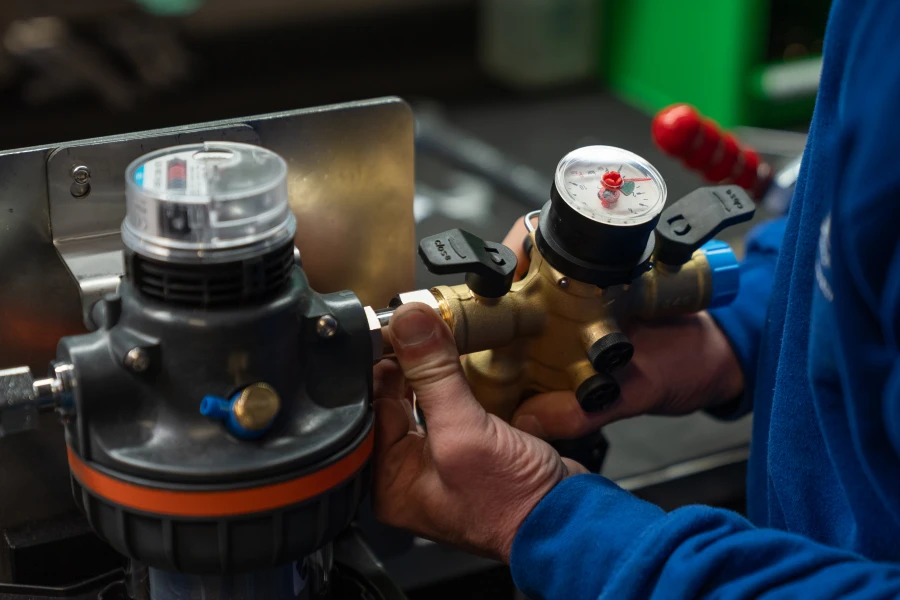
Nachfüllstationen mit regenerierbarem Harz, klarer Dokumentation und gutem Servicekonzept unterstützen eine langfristig wirtschaftliche Betriebsführung. Sie sind nicht automatisch die billigste Einzelkomponente, aber oft die bessere Betreiberlösung.
Für ORBEN passt das Thema Nachfüllstation besonders gut, weil es mehrere Kompetenzfelder verbindet: Heizwasser, VDI 2035, AGFW FW 510, Ionenaustauscherharze, Regeneration, Mehrwegharz, Mess- und Prüftechnik, mobile Wasseraufbereitung und Service. Genau diese Verbindung ist für Betreiber entscheidend.
Eine Nachfüllstation ist nicht isoliert zu betrachten. Bei kleinen bis mittleren Anlagen kann ein stationäres System mit Entsalzungspatrone, Systemtrenner, Messung und Wartungskonzept die richtige Lösung sein. Bei großen Fernwärmeprojekten kann die Erstbefüllung über mobile Trailer-Systeme erfolgen, während die stationäre Nachfüllstation den Regelbetrieb absichert. Bei Bestandsproblemen kann eine Bypass-Aufbereitung, eine Filtration oder auch einHarzwechsel erforderlich werden. Bei nachhaltigen Beschaffungskriterien kann Mehrwegharz den Unterschied machen.
Der Mehrwert entsteht aus dem Systemgedanken: Analyse, Auslegung, Inbetriebnahme, Betrieb, Wartung, Harzregeneration, Dokumentation und Notfallfähigkeit greifen ineinander. Genau das brauchen Asset- und Betriebsverantwortliche, wenn sie nicht nur eine Komponente beschaffen, sondern eine Fernwärmeanlage dauerhaft stabil betreiben wollen.
Vor der Bestellung oder Freigabe einer Nachfüllstation sollte das Projektteam folgende Punkte klären:
Eine neue Fernwärmeanlage ist nur so stabil wie ihr Betriebskonzept. Die Erstbefüllung legt den Startpunkt fest, aber die Nachfüllstation entscheidet, ob dieser Startpunkt gehalten wird. Deshalb gehört die Nachfüllstation früh in Planung, Ausschreibung, Inbetriebnahme und Betreiberübergabe.
Operators in Saxony, Hamburg, Brandenburg, or other regions do not face entirely different technical principles. What matters are the specific system, relevant regulations, network operator requirements, drinking water protection, water chemistry, documentation, and serviceability. Especially for hospitals, municipal utilities, district networks, industrial plants, and heat storage facilities, the refill station should not be treated as a mere byproduct. It is a protective component for operational safety, warranty, auditability, and total cost of ownership.
The best solution is rarely an isolated individual component. It is a coordinated water quality system comprising analysis, treatment, system separation, measurement, documentation, resin management, maintenance, and emergency preparedness. This is precisely where a heating water refill station becomes a robust component of modern district heating infrastructure.


.svg)