In heating and process systems, water circulates as a heat transfer medium. Its quality determines the efficiency, lifespan, and warranty of the entire system. Even small amounts of scale or corrosion products can impede heat transfer and cause damage. VDI Guideline 2035 and AGFW Worksheet FW 510 define clear limit values to support operators, specialist planners, and tradespeople: an electrical conductivity of < 100 µS/cm, a pH range between 8.2 and 10 (or 8.2–9.0 for aluminum materials), and a total hardness of < 0.3 °dH are considered standard requirements for low-salt operation. For district heating systems, FW 510 tightens the conductivity to 10–30 µS/cm and requires pH values of 9.0–10.0. If these values are not met, corrosion, scale formation, and even loss of the manufacturer's warranty are threatened.
Our core persona – asset and operations managers in heating networks, energy, and process plants – requires standard-compliant heating water that increases operational safety, reduces Total Cost of Ownership (TCO), and passes audits. HVAC tradespeople and building services planners are also obliged to comply with and document the standards. This article guides you step-by-step through the filling process: from raw water analysis and the selection of the treatment method to documentation and the choice of modern technology. The presentation is based on the content hubs "Heating Water and Regulations (VDI 2035 / FW 510)", "Ion Exchangers and Regeneration", "Mobile Water Treatment and Trailer Systems", and "Sustainability and Reusable Resin".
Regulatory Framework: VDI 2035 and AGFW FW 510
VDI 2035 – Low-Salt or High-Salt?
The VDI Guideline 2035 is the most important German regulatory framework for hot water heating systems. It consists of two parts: Part 1 deals with the prevention of boiler scale, Part 2 with the prevention of corrosive damage. In the current edition (since March 1, 2021), the limit values have been updated; the limit value for complete softening was raised to 0.3 °dH, and the permissible pH range for aluminum materials was increased to 9.0. The guideline distinguishes between low-salt and high-salt operating modes:
Low-Salt Operation: The water is freed from dissolved ions to such an extent, through demineralization or a combination of softening and pH regulation, that the electrical conductivity is below 100 µS/cm. The recommended pH value is between 8.2 and 10 for systems without aluminum and between 8.2 and 9.0 for systems with aluminum. The total hardness should be ≤ 0.3 °dH.
High-Salt Operation: For larger systems or special materials, a high-salt operating mode may be permissible. Here, conductivity values between 100 and 1,500 µS/cm are allowed, but only under strict oxygen control and with pH regulation. In this mode, inhibitors are often used; documentation and maintenance intervals must be set more frequently.
VDI 2035 requires operators to document: Filling and make-up water must be measured during initial filling and after 8–12 weeks, then at least annually. If the pH value, hardness, or conductivity exceed the limit values, the warranty of many manufacturers expires.
AGFW FW 510 – Focus on District Heating Networks
Worksheet FW 510 supplements the VDI Guideline and sets stricter rules for district and local heating networks. For low-salt networks, it requires a conductivity of 10–30 µS/cm, a pH value between 9.0 and 10.0, and an oxygen content below 0.1 mg/l. For high-salt operation, FW 510 permits higher conductivity values up to 1,500 µS/cm if the oxygen content is significantly reduced and the pH value is raised to 9.0–10.5. For total hardness, a limit value of 0.02 mmol/l (≈ 0.11 °dH) applies. The guideline distinguishes between three operating modes (low-salt, high-salt, salt-rich) and requires continuous monitoring of all parameters.
Importance of Key Parameters
pH Value: A slightly alkaline pH value protects metals by forming passive oxide layers. If it drops, the risk of pitting corrosion increases; if it rises above the recommended range, aluminum alloys can be attacked.
Electrical Conductivity: It indicates the sum of dissolved ions. Values above the limit values increase the risk of electrochemical corrosion and scale formation. For demineralized water, the conductivity drops to < 10 µS/cm, which means fewer oxygen scavengers are needed.
Total Hardness: Calcium and magnesium ions form boiler scale at high temperatures. Even a one-millimeter layer of scale can reduce heat transfer by up to ten percent. The larger the system and the specific volume, the lower the total hardness must be – for systems over 600 kW, it is < 0.11 °dH.
Oxygen Content: Oxygen accelerates corrosion. In low-salt systems, VDI 2035 tolerates up to 0.1 mg/l; for high-salt systems, stricter limits are required. Therefore, oxygen control is a critical aspect of filling.
Step-by-step to Standard-Compliant Heating System Filling
Filling a heating system is a planned process, divided into several phases: raw water analysis, filtration, demineralization/softening, pH regulation, degassing, measurement and documentation technology, and the selection of the supply system. The following sections describe these steps in detail, with reference to the relevant standards and the requirements of our personas.
1. Analysis of Fill and Make-up Water
Before a system is filled or refilled, the initial water quality must be determined. This includes measuring total hardness, conductivity, pH value, and oxygen content. In district heating projects, silicate, chloride, and CO₂ levels are also relevant.
Measuring Devices: The pH value is measured with calibrated pH meters; mobile handheld devices allow for on-site checks. Electrical conductivity is measured by conductivity meters, where high-quality sensors are necessary for very low values to avoid measurement errors. Hardness can be determined titrimetrically; double the water volume and complexometric titration achieve accuracies of 0.1 °dH. For large industrial plants, ion chromatography or ICP spectroscopy are used.
Documentation: VDI 2035 requires that measured values, make-up water quantities, and maintenance be documented in the plant logbook. Digital sensors can automatically transmit data to an operational management system, which improves auditability and reduces TCO.
2. Pre-filtration and Dirt Removal
Suspended solids, rust, and magnetite particles cause flow losses and clog heat exchangers. Therefore, pre-filtration should be carried out before chemical treatment. The use of magnetite and sludge separators, as well as deaerators, is standard equipment to ensure the long-term safety of the system.
Equipment Selection: For small systems, reusable cartridges with filters and magnetite separators are sufficient; in large systems, automatic backwash filters with magnetite separation are advisable. Standards do not specify concrete filter pore sizes, but practical experience shows that fine filters with 50–100 µm effectively remove particles, while additional magnetite separators bind ferromagnetic particles.
Degassing: Dissolved gases (oxygen, carbon dioxide) increase the corrosion rate. Inline vacuum degassers or microbubble separators reduce the gas load and facilitate compliance with oxygen limits.
3. Hardness Removal: Softening and Demineralization
Hardness is removed by ion exchange or membrane processes. Several options are available to skilled trades:
Softening (Cation exchange in Na⁺ form): Cation exchangers replace calcium and magnesium ions with sodium ions. For heating systems, this technique is only suitable for high-salt operation (100–1,500 µS/cm), because the sodium load increases conductivity and requires additional conditioning. Softened water is therefore primarily of interest as a preliminary stage for demineralization or for smaller systems where the manufacturer permits high-salt operation.
Demineralization (DI Water): DI water is produced by combining an H⁺-form cation exchanger with an OH⁻-form anion exchanger. The result is nearly ion-free water with conductivities < 10 µS/cm, as required by VDI 2035 for low-salt operation. Alternatively, reverse osmosis with a downstream mixed-bed filter can be used. Mixed-bed ion exchangers combine cation and anion exchange resins in a 40/60 ratio and achieve conductivities < 0.2 µS/cm. The choice between two-stage demineralization and a mixed bed depends on the system capacity, the required water volume, and the purity requirements.
Membrane Processes: Reverse Osmosis (RO) and Electrodeionization (EDI) are membrane-based processes for producing DI water. For filling large systems, a combination of reverse osmosis and a mixed-bed filter can be economical. EDI systems operate continuously and deliver water qualities down to < 0.1 µS/cm, but are only cost-effective for large projects.
Regeneration: Used resins must be regenerated. Na⁺-form cation exchangers are regenerated with brine (NaCl), while H⁺-form cation exchangers are treated with hydrochloric acid (HCl). Anion exchangers are regenerated with caustic soda (NaOH). Regenerable multi-use resin systems are sustainable and reduce the consumption of single-use cartridges. ORBEN operates Europe's largest regeneration plant for mixed-bed resins and offers a resin express service for quick exchange.
4. pH Regulation and Conditioning
After demineralization, the water's pH value is adjusted. VDI 2035 recommends 8.2–10 pH for steel and copper systems and 8.2–9.0 pH for systems with aluminum. For district heating systems (FW 510), the target ranges are 9.0–10.0 pH (low-salt) and 9.0–10.5 pH (high-salt). pH regulation can be achieved by the metered addition of alkaline conditioning agents (e.g., sodium hydroxide) or acids (e.g., carbonic acid). Dosing must be particularly careful in aluminum systems, as a pH > 9.0 promotes aluminum corrosion.
Chemical Inhibitors: In high-salt operation, corrosion inhibitors that form protective films are often used. Organic inhibitors based on polyphosphates, silicates, or molybdates protect steel and copper, while films made of silicones or polymers hardly impair heat transfer. Corrosion inhibitors must match the material range and cannot be removed by ion exchangers.
5. Degassing and Oxygen Management
Even after demineralization and pH regulation, dissolved oxygen can lead to corrosion. District heating guidelines recommend an oxygen content of < 0.1 mg/l (low-salt) or < 0.02 mg/l (high-salt). Modern systems use vacuum degassers, thermal degassers, or membrane degassers to reduce oxygen before feeding. In closed systems, oxygen ingress is also minimized by gas-tight expansion vessels and diffusion-tight plastic pipes.
Oxygen Scavengers: In low-salt circuits, the use of chemical oxygen scavengers (e.g., hydrazine, sodium sulfite, carbohydrazide) may be necessary if residual contents > 0.05 mg/l occur. However, these agents are rarely used due to their environmental and health risks and are only common in large systems or steam generators.
6. Selection of the Supply System: Cartridges, Stationary Systems, or Mobile Trailers?
The choice of supply system depends on the system size, the required water volume, the project schedule, and emergency capability. For HVAC trades and MEP planners, the question arises: cartridge system, stationary DI system, or mobile trailers?
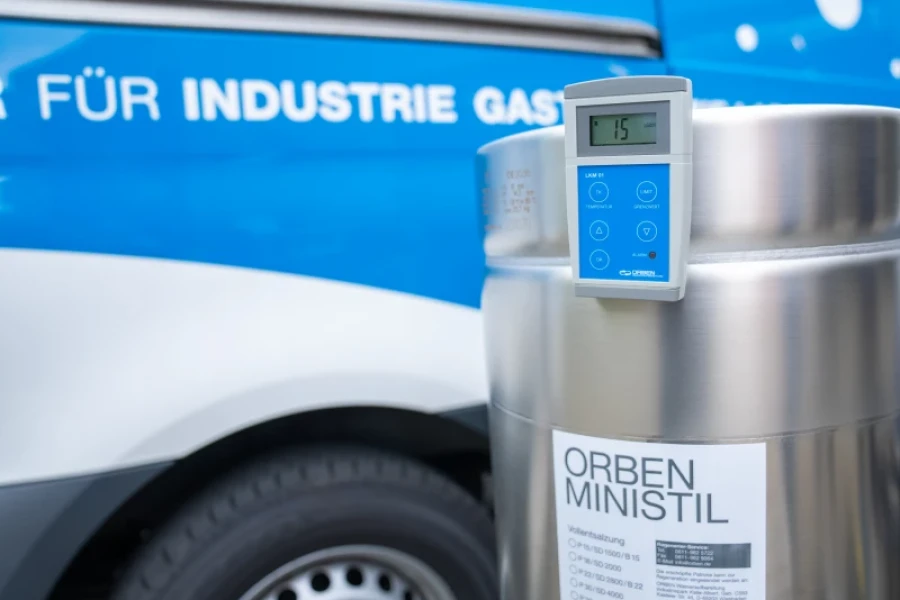
Ion Exchange Cartridges: For initial fillings of small to medium-sized heating systems, mobile ion exchange cartridges are often used. They can demineralize around 300 liters of water at 10 °dH and must then be regenerated or replaced. Their easy handling and lower investment cost make them attractive for skilled trades. The cartridges should be filled with multi-use resin to reduce environmental impact.
Stationary Demineralization Plants: In power and process plants or large district heating networks, a stationary demineralization plant with ion exchangers or reverse osmosis is advisable. These systems continuously supply demineralized water, which is stored in buffer tanks. A downstream mixed-bed filter polishes the water to < 0.2 µS/cm. Stationary plants require space, regular maintenance, and trained operators. However, they are often more economical in the long run because the cost per cubic meter of demineralized water drawn decreases.
Mobile Trailer Systems: Mobile trailers supply demineralized water in large quantities (10,000 – 120,000 liters per hour) and can be brought to any location within a short time. Trailers are used for new construction projects, renovations, or emergencies. They allow for filling in bypass mode, so ongoing operations are not interrupted. Thanks to their modular design, multiple trailers can be connected to achieve high flow rates. Mobile systems are also suitable for emergency supply when a resin change in a stationary plant is not immediately possible.
Regeneration and Sustainability: ORBEN offers a reusable resin program and a resin express service. Regenerable resins reduce resource consumption and lower TCO. Choosing a reusable resin system is also advantageous for sustainability reasons: it minimizes waste and reduces the carbon footprint.
7. Measurement and Monitoring Technology
Compliance with limit values can only be ensured through regular measurement. VDI 2035 requires measurements during initial filling, after 8–12 weeks, and then at least annually.
Stationary Sensors: In large plants, conductivity, pH, and oxygen sensors are permanently integrated into the piping system and monitored via a measurement and control loop. For demineralized water (< 10 µS/cm), sensors must be temperature-compensated and flushable to prevent deposits.
Mobile Measuring Devices: For spot checks, service technicians use mobile conductivity and pH meters, as well as hardness test kits. High-quality devices ensure reliable measurements; simple test kits are suitable for quick field tests.
Digital Documentation: Modern plants use electronic plant logs: Sensors transmit measured values to a cloud platform, which monitors thresholds and triggers alerts. Asset managers can identify trends, plan resin changes, and export data for audits. Electronic documentation meets the auditability requirements of VDI 2035 and FW 510 and simplifies the burden of proof towards manufacturers.
Decision Logic for Filling
The choice of filling method depends on several factors: size and type of plant, materials, manufacturer specifications, standards, timeframe, budget, and sustainability aspects. The following decision logic helps determine the correct approach:
Requirements Analysis: Determine the plant size, materials (steel, copper, aluminum), type of heat generator, and manufacturer specifications. Check whether VDI 2035 or AGFW FW 510 applies and whether the manufacturer requires low-salt or salt-containing operation.
Raw Water Analysis: Determine the raw water quality. For high hardness and conductivity, full demineralization is required; for moderate values, softening combined with pH regulation may suffice.
Selection of the Treatment Process: Choose between softening, demineralization (ion exchange or membrane processes), or mixed bed. Consider investment and operating costs, as well as the possibility of resin regeneration.
pH Regulation and Inhibitors: Set the pH value within the recommended range; for aluminum materials, avoid values > 9.0 pH. Check if inhibitors are required.
Degassing: Install degassers or microbubble separators. Monitor the oxygen content during filling and ensure that the limit values according to VDI 2035 or FW 510 are met.
Choose a Supply System: For small projects, cartridges are suitable; for large or continuous supply, stationary systems or mobile trailers. Consider sustainability and choose reusable resin systems.
Monitoring and Documentation: Plan fixed measurement intervals and complete documentation of the values. In case of deviations, immediate measures must be initiated (replenishment with demineralized water, pH correction, resin change).
Challenges and Best Practices
Material Diversity and Galvanic Effects
Modern heating systems consist of a combination of steel, copper, aluminum, and plastics. Different galvanic potentials lead to corrosion cells if the water is too conductive or the pH value is not optimal. Aluminum is particularly sensitive: at pH values > 9.0, passive film corrosion forms. Therefore, in systems with aluminum components, the pH range of 8.2–9.0 should be maintained, and low-salt operating methods with demineralized water should be used whenever possible.
Replenishment and Make-up Water
Most damage does not occur during initial filling, but due to uncontrolled replenishment. Each addition changes the water quality and increases the salt load. Replenishment units should therefore be equipped with demineralization cartridges that automatically desalinate the make-up water. The conductivity in the system should be continuously monitored; if limit values are exceeded, either replenishment must occur or the heating water must be cleaned in bypass mode.
Bypass Cleaning During Operation
In existing systems, it may be necessary to clean the heating water during operation to correct exceedances of limit values. This is done using the bypass method: a mobile treatment unit is connected to the heating system and cleans the heating water without interrupting operation. This method was successfully applied, for example, in a Leipzig hospital: 140,000 liters of heating water were treated in bypass mode, while 285 km of pipelines remained in operation – a solution-oriented method for sensitive facilities.
Auditability and Total Cost of Ownership
Standard-compliant filling is not only a technical requirement but also an economic lever. Measurement and documentation obligations are facilitated by digital sensor technology and enable predictive maintenance. Operators can identify trends, optimize resin changes, and reduce service costs. At the same time, reusable resin systems promote sustainability and reduce the consumption of disposable cartridges. Mobile trailers can cover emergencies and prevent project downtimes. A holistic view of TCO considers acquisition costs, operating costs, energy efficiency, outage risks, and sustainability factors.
Outlook: Ultrapure Water for Future Industries and the Role of the Energy Transition
District heating, hydrogen and battery production, semiconductor manufacturing, and many other future industries require ultrapure water with extremely low conductivity and controlled ion content. The lines between heating water treatment, process water, and ultrapure water are blurring. VDI Guideline 2035 and AGFW FW 510 already provide a strict framework; for process and ultrapure water, additional standards (DIN ISO 3696, ASTM D1193) apply, with conductivities < 1 µS/cm. ORBEN therefore offers reverse osmosis and electrodeionization systems that deliver industrial-grade pure and ultrapure water. Thanks to modular trailer systems and sustainable reusable resins, these technologies can also be used in short-term projects or during maintenance.
The energy transition increases the demand for efficient heating networks, heat pumps, and renewable heat sources. Standard-compliant water treatment plays a key role, as corrosion-free and energy-efficient systems make a significant contribution to saving primary energy. Moving away from single-use resin and using regenerable resins aligns with sustainability goals and the EU Green Deal.
Standard-compliant water treatment as the key to long-lasting heating systems
Standard-compliant filling of a heating system is an interdisciplinary task that combines chemistry, process engineering, measurement technology, and business administration. VDI 2035 and AGFW Worksheet FW 510 define clear limit values for conductivity, pH value, hardness, and oxygen content, as well as documentation requirements. Adhering to these rules protects your system from scale formation and corrosion, maintains the manufacturer's warranty, and reduces long-term operating costs.
Asset and operations managers benefit from a systematic approach: raw water analysis, selection of the appropriate treatment process (softening, demineralization, mixed bed, membranes), pH regulation, degassing, and targeted choice of supply system (cartridge, stationary plant, mobile trailers).
HVAC professionals should view the use of reusable resin and digital measurement and documentation technology as a distinguishing feature: Sustainable, auditable solutions increase customer satisfaction and demonstrate professional expertise.
A look into the future shows that water quality requirements will continue to rise, especially in district heating networks and future industries. Those who invest in standard-compliant water treatment today secure competitive advantages, reduce the total cost of ownership, and contribute to the energy transition.
Other relevant sections on our website
Ion Exchangers and Regeneration: Learn how cation, anion, and mixed-bed ion exchangers work, which resins are suitable, and how sustainable reusable resin systems reduce operating costs.
Mobile Water Treatment and Trailer Systems: Discover our flexible trailers that can quickly supply large quantities of demineralized water for new construction, renovation, or emergencies, and can be used in bypass operation.
Sustainability and Reusable Resin: Learn how reusable resin systems reduce waste, improve the CO₂ footprint, and simultaneously comply with VDI 2035 and FW 510 standards.
.webp)


.svg)