Modern heating and district heating systems transfer heat via water. The performance of these systems largely depends on water quality. Pipes, heat generators, plate heat exchangers, and circulation pumps are made of various materials such as steel, copper, aluminum, or stainless steel. In combination with high temperatures and constant load cycles, unsuitable water leads to scale formation, corrosion, and magnetite sludge; these deposits cause energy losses or even system failure. To provide clear guidelines for operators and planners, VDI Guideline 2035 (Parts 1 and 2) and AGFW Worksheet FW 510 define limit values for electrical conductivity, pH value, water hardness, and oxygen content of heating water. Adhering to these parameters minimizes the risk of damage and ensures trouble-free operation.
Compliance with standards is not just a technical requirement, but also an economic factor. If the guidelines are disregarded, manufacturers may refuse commissioning, warranty claims may be lost, efficiency losses can occur, and medium- to long-term damage to the heating system may result. At the same time, costs arise from unsuitable fill and make-up water quantities, uncontrolled oxygen ingress, or incorrect pH values. The aim of this article is to clarify the cost structure of heating system filling according to VDI 2035 and to show operators how they can reduce total operating costs. The benefits for our primary and secondary personas are always paramount: asset and operations managers in heating networks, energy and process plants, as well as HVAC professionals and technical building equipment planners.
VDI Guideline 2035 distinguishes between low-salt and high-salt operation. For low-salt operation, the conductivity of the circulating water at 25 °C must remain below 100 µS/cm. At the same time, the guideline recommends a pH value between 8.2 and 10 for systems made of steel and copper, and 8.2 to 9 for heating systems with aluminum. Exceeding or falling below these values increases the risk of corrosion, as overly acidic pH values dissolve metal ions from the system, and overly alkaline water attacks aluminum or copper.
The guideline also specifies limit values for total hardness, measured as the sum of alkaline earth metals. For larger systems (> 600 kW), the total hardness must be < 0.11 °dH. The oxygen content for low-salt operation should be < 0.1 mg/l. For high-salt operation, conductivity values between 100 and 1,500 µS/cm are permissible, but corrosion tendency increases with higher salt content, often necessitating additional inhibitors.
Worksheet FW 510 supplements the VDI rules and tightens them for local and district heating systems. For low-salt operation, FW 510 requires conductivity between 10 and 30 µS/cm; for high-salt operation, it distinguishes between levels of 30–100 µS/cm and 100–1,500 µS/cm. The pH value for low-salt operation should be between 9.0 and 10.0; for high-salt systems, 9.0 to 10.5 is permissible. The oxygen content remains similar to VDI 2035 at < 0.1 mg/l in low-salt networks, and even < 0.02 mg/l in high-salt networks. For operations with plate heat exchangers or aluminum-containing components, FW 510 recommends not exceeding conductivity values of 30 µS/cm and pH values of 9–10.
The UWS technical information "Heating Water Treatment according to VDI 2035" points out that non-compliance with standards has serious consequences: Manufacturers may refuse commissioning, warranty claims in case of damage are rejected, the system suffers from performance and efficiency losses, and medium- to long-term damage is threatened. These risks directly translate into costs – through repairs, replacement investments, and energy losses. Therefore, a standard-compliant filling of the heating system is not optional, but a prerequisite for operational safety and economic efficiency.
The pH value indicates whether water is acidic or basic. An overly acidic pH value dissolves metal ions from pipes; an overly alkaline pH value causes aluminum, in particular, to corrode. At the same time, electrical conductivity influences the corrosion rate: the lower the salt content and thus the conductivity, the smaller the electrochemical corrosion current. Hardness-forming substances like calcium and magnesium ions lead to scale formation at high temperatures, which impedes heat transfer. These factors interact and determine whether materials are protected or attacked.
A violation of these parameters leads to hidden costs. Limescale deposits act like an insulating layer: even a thin layer of scale just a few millimeters thick can reduce heat transfer by several percent. The UWS technical information shows that corrosion potential increases sharply with rising conductivity; inhibited corrosion only occurs in the ideal pH range at < 100 µS/cm. If the pH value becomes too high, copper or aluminum ions dissolve and trigger galvanic currents that weaken the material. In practice, such deviations mean higher energy consumption, increased pump performance, more frequent maintenance, and thus higher operating costs.
The immediately visible costs of heating system filling consist of investments in treatment equipment and consumables. However, the largest cost block arises in the long term due to inefficient operation and damage. If tap water is used unfiltered, limescale and magnetite accumulate, valves and heat exchangers clog, flow decreases, and the system has to work harder. In this case, electricity and fuel costs increase – a permanent additional consumption that multiplies total costs over years. Furthermore, pump or boiler failures can lead to long downtimes, emergency measures, and contractual penalties, for example, if district heating networks cannot meet their supply obligations.
VDI 2035 therefore requires professional treatment to ensure that the limit values for pH, conductivity, hardness, and oxygen are reliably met. The next section describes the individual steps and explains their cost factors.
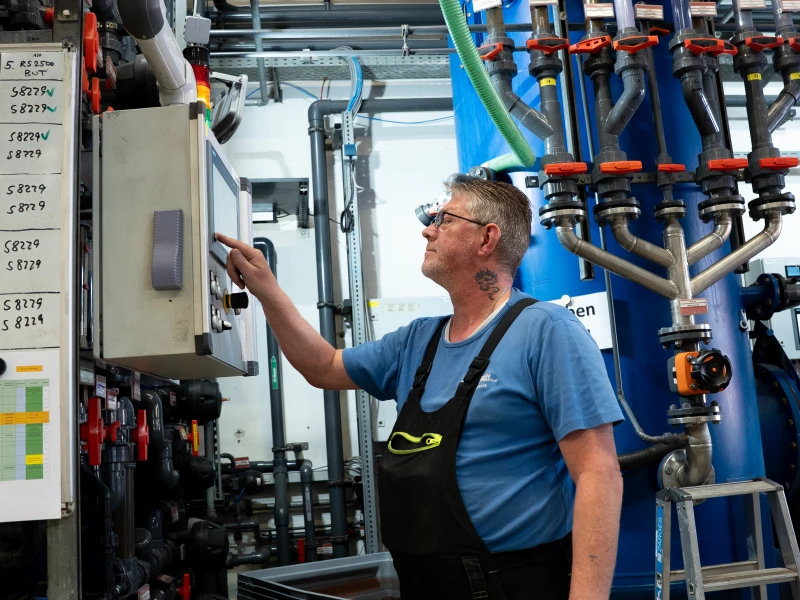
Standard-compliant heating water treatment consists of several steps. It begins with a careful analysis of the raw water, proceeds through the physical removal of undesirable components, and concludes with the adjustment of chemical parameters. Each step incurs its own costs, but at the same time, savings can be achieved through well-conceived technology and efficient operating processes.
Before initial filling or topping up, the raw water is analyzed. The water analysis includes the determination of total hardness, conductivity, pH value, and oxygen content. In district heating projects, additional parameters such as silicate and chloride levels, as well as CO₂ content, are measured. Laboratory and measurement technology costs are incurred for these analyses. Digital measuring devices (e.g., portable conductivity and pH meters) allow for spot checks; inline sensors monitor continuously and are temperature-compensated to 25 °C. Even a basic setup consisting of a conductivity meter, pH meter, and hardness test kit costs several hundred euros, while high-quality sensors can cost several thousand euros. This investment pays off if the data is used to regenerate fill water early and prevent damage.
Suspended solids, rust, and magnetite particles cause flow losses and clog heat exchangers. Before chemical treatment, the circulating water should be filtered. Costs arise from the acquisition and operation of magnetite and sludge separators, as well as bag filters. In the case study of a hospital, a bag filter was used to remove magnetite and suspended solids before bypass demineralization began. For smaller systems, simple strainers are sufficient; for district heating networks, robust separators with automatic flushing are required. Maintenance personnel must regularly clean these filters, which incurs labor costs.
Softening using cation exchangers removes calcium and magnesium ions and prevents scale formation, but it only slightly reduces conductivity; sodium ions remain in the water and can even increase conductivity. This method is therefore only sufficient if conductivity in a higher range (100–1,500 µS/cm) is permitted, as in saline heating systems. For modern condensing boilers and district heating systems, softening is usually not sufficient because it does not meet the limit values for low-salt operation.
Demineralization using mixed-bed ion exchangers or combinations of cation and anion exchangers removes almost all dissolved salts. Fully demineralized water exhibits conductivity values < 100 µS/cm or even < 30 µS/cm, and the pH value often automatically rises to the desired range. This method complies with standards, but it incurs investment and operating costs. For the initial filling of small heating systems, mobile cartridge systems are often used. These can demineralize approximately 300 liters of water at 10 °dH (German hardness) and must then be regenerated or replaced.
For larger systems or frequent top-ups, a stainless steel cartridge with a conductivity meter is recommended. The "SD 2000" demineralization cartridge with integrated measuring device and hose set is particularly popular. Such systems are regenerable and supply several thousand liters of demineralized water. The higher acquisition costs pay off in larger projects because they need to be changed less frequently. Operators should calculate the cartridge capacity based on the system volume, total hardness, and makeup water quantities; over-dimensioning increases the investment, while under-dimensioning leads to frequent resin changes.
Depending on the system size, stationary demineralization plants with flow rates of 10,000 to 60,000 liters per hour can be beneficial. These systems, as used in district heating networks, cost in the five- to six-figure euro range. Here, renting or leasing is worthwhile, especially since mobile trailer systems can treat water on-site and be removed after the project.
Demineralization often automatically brings the fill water into the desired pH range. In special cases or during top-ups, active pH adjustment may be necessary. Alkalization filters (e.g., lime water plants) or dosing stations for alkalizing agents stabilize the pH value. The costs for chemical buffer solutions are relatively low compared to the potential damage from an incorrect pH value. However, dosing must not increase conductivity; inhibitors and oxygen scavengers often increase conductivity, which is why they should be used sparingly.
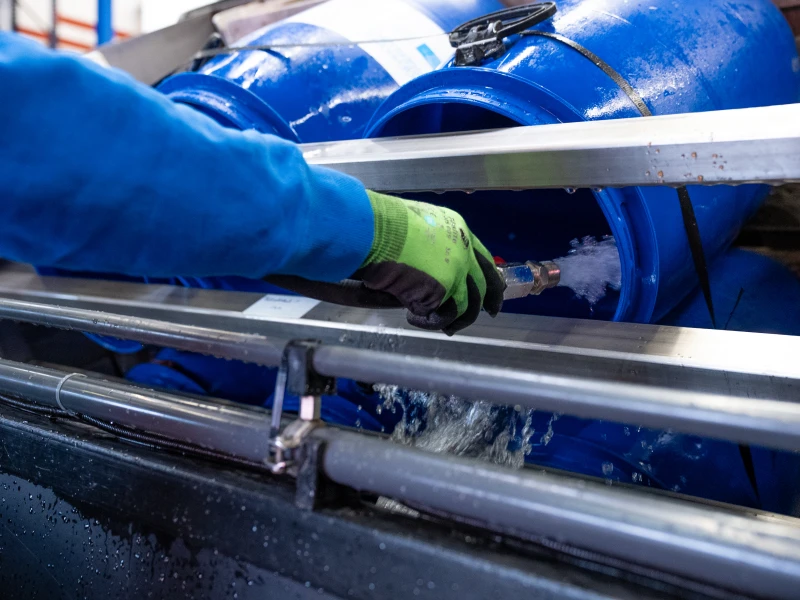
Oxygen causes corrosion. Therefore, heating systems are vented, and the fill water is degassed. Techniques such as thermal degassing, vacuum degassing, or membrane degassing reduce dissolved oxygen. In local heating networks, partial-flow degassing systems are used, which operate in bypass mode and continuously remove gases. These systems cost several thousand euros, but they pay for themselves through protection against pitting corrosion. Modern degassing modules can be coupled with conductivity sensors, so that makeup water systems only top up when limit values are not met, thereby saving water and chemicals.
For new constructions, renovations, or emergencies, large quantities of heating water must be treated. Mobile trailer systems supply demineralized water at rates of 10,000 to 120,000 liters per hour and meet VDI limit values. They are suitable for large-scale projects such as district heating storage facilities, hospitals, or industrial plants and can be rented as needed. The costs for a trailer depend on capacity, rental duration, and transport distance. Mobile systems reduce investment because they are only needed temporarily and replace the purchase of expensive stationary systems.
Stationary makeup water units ensure that makeup water is automatically demineralized during ongoing operation. In district heating networks, partial-flow treatment plants are used, combining demineralization, alkalization, filtration, and degassing. These systems can be controlled and documented via remote monitoring, reducing maintenance effort and personnel time. The higher acquisition cost is offset by lower long-term operating costs, increased operational reliability, and reduced risks.
Standards such as VDI 2035 and FW 510 require regular monitoring and documentation of water parameters. Conductivity meters and pH loggers must be calibrated regularly; hardness and oxygen meters complement the monitoring. Documentation is carried out in a system logbook, where all measured values, treatment measures, resin changes, and malfunctions are recorded. Manufacturers and auditors require proof that the heating water meets specifications when warranty claims are made. Therefore, operators should choose digital systems that can automatically save and export measured values. Costs for cloud connections and software licenses must be factored in, but they are low compared to liability risks.
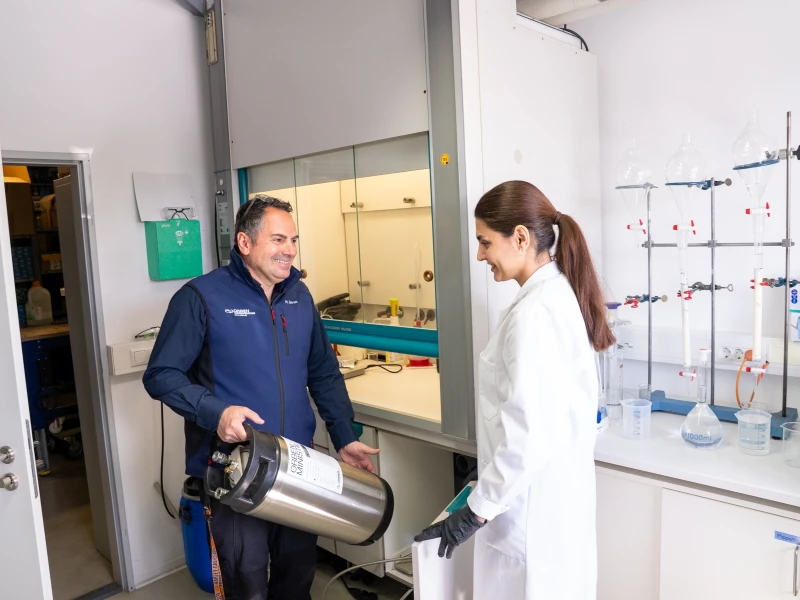
The lifespan of ion exchangers and filters depends on their load. Resin cartridges must be changed or regenerated as soon as the permeate's conductivity increases. Some systems have color-change indicators that signal when the resin needs to be changed. VDI 2035 recommends checking the pH value at least once a year; in district heating networks, conductivity should be monitored monthly. Training for building technicians and the HVAC trade is necessary to operate measuring devices correctly and interpret the data. Orben offers an express resin exchange service and training, enabling skilled tradespeople to perform the treatment independently. While this service incurs costs, it ultimately saves on error-related expenses and enhances safety.
The steps described above illustrate that compliant heating system filling involves various cost areas: analysis and measuring devices, filtration, demineralization/softening, pH regulation, degassing, mobile or stationary systems, monitoring, and maintenance. To put these investments into perspective, it's worth considering the entire lifecycle of the system.
A crucial factor is how spent resin is handled. Single-use resins must be disposed of and replaced with new ones once their capacity is reached; the costs for new fillings increase ongoing operational expenses and generate waste. Reusable resin, however, can be regenerated. ORBEN operates Europe's largest regeneration plant, regenerating up to 40,000 liters of resin per day. Approximately 10,000 customers use this service, where resins are selectively cleaned, processed, and returned with no loss of capacity. Application-specific, single-grade regeneration is possible for as little as 2,500 liters. Reusable resins reduce resource and waste costs, extend cartridge lifespan, and improve economic efficiency. Additionally, the regeneration plant uses Rhine water for flushing processes and returns it to the Rhine in a biologically improved state, thus avoiding the consumption of municipal or drinking water. Regeneration incurs fees, but it is significantly cheaper than purchasing new resins and reduces environmental impact.
The UWS technical information warns that violations of VDI 2035 can lead to commissioning refusal, loss of warranty claims, efficiency losses, and long-term damage. These consequences can significantly exceed the initial investment costs. A lost warranty means that in the event of damage, the operator must cover the costs for expensive boilers or heat exchangers themselves. Efficiency losses increase energy costs for years, and corrosion damage can shut down an entire network. The commercial benefit of compliant filling therefore only becomes evident over the system's lifecycle: a small additional effort during initial filling prevents significantly higher subsequent costs.
Whether a heating system operates with low-salt or salt-containing water depends not only on standards but also on economic considerations. Low-salt operation requires higher investments in demineralization plants; however, it reduces maintenance costs, extends lifespan, and allows for higher oxygen levels without damage. Salt-containing operation is cheaper in terms of initial investment but requires frequent checks, degassing, and potentially corrosion inhibitors. In district heating networks, low-salt operation is predominantly chosen for operational safety. Operators should therefore conduct a lifecycle analysis, balancing the savings from reduced energy consumption, shorter maintenance intervals, and longer system lifespan against the higher acquisition costs.
The costs associated with heating system filling can be reduced through technical and organizational measures. The following outlines key optimization approaches directly addressing the needs of our primary and secondary personas.
Instead of single-use resins, operators should consistently opt for reusable resin. The ORBEN regeneration plant regenerates up to 40,000 liters of resin per day and serves around 10,000 customers. The resins are selectively cleaned, processed, and returned with no loss of capacity in a multi-stage process. Single-grade regeneration is possible for as little as 2,500 liters, and each customer can receive their own OEM pool to utilize specific resin mixtures. Reusable resins not only reduce waste volume but also operational costs, as the cartridge can be reused many times. At the same time, comprehensive documentation for each cartridge (batch number and filling date) ensures transparency and traceability, an important aspect for audits.
Continuous measurement of conductivity, pH value, total hardness, and oxygen content is crucial for operational safety. Modern conductivity sensors provide real-time data and can automatically control replenishment systems. pH loggers and hardness sensors enable immediate detection of deviations. Cloud connectivity allows data to be centrally stored, evaluated, and linked with maintenance plans. Digital monitoring reduces personnel costs, minimizes incorrect fillings, and enables predictive maintenance. Asset managers can thus identify trends and schedule resin changes in a timely manner. Furthermore, electronic documentation facilitates auditability and provides proof for manufacturers and certification bodies.
Mobile trailer systems offer flexibility for heating system filling. They supply demineralized water in large quantities (10,000 to 120,000 liters per hour) and can be transported to any location within a short time. These systems have proven effective in projects such as the Evangelical Deaconess Hospital, where heating water had to be replaced during ongoing hospital operations. Mobile systems allow for filling in bypass mode, ensuring that ongoing operations are not interrupted. Emergency capability is particularly important for district heating networks, where leaks or contamination can abruptly degrade water quality. Thanks to their modular design, multiple trailers can be connected to fill large storage volumes. Compared to purchasing stationary systems, renting or short-term use of trailer systems represents a cost-efficient alternative.
Regardless of the chosen technology, the expertise of operating personnel remains a central success factor. Training teaches how to calibrate measuring devices, correctly interpret pH and conductivity values, and change filters and resins. Orben offers an express resin exchange service and training, enabling HVAC/plumbing tradespeople to perform the treatment independently. Regular maintenance appointments and expert support help to identify and resolve problems early. In large projects where multiple trades collaborate, close coordination is necessary to minimize downtime. Service technicians can supervise the filling process, document measurements, and verify the handover to clients or operators.
Asset managers should consider not only the acquisition costs but the entire life cycle of water treatment. Energy-efficient desalination plants and digitally controlled make-up water systems reduce energy consumption. High quality heating water extends the lifespan of pipes, heat exchangers, and boilers, thereby saving replacement and maintenance costs. A TCO analysis also includes the costs of downtime; in district heating networks, supply failures due to hot water lines can lead to high contractual penalties. If in doubt, a higher investment in low-salt operation is advisable because it significantly reduces subsequent costs.
Sustainability is a key decision-making factor for many operators. Reusable resin minimizes waste and allows for the resin's reuse. Mobile water treatment systems produce water directly on-site, eliminating the need for water transport in tank trucks and reducing the CO₂ footprint. The regeneration station uses Rhine water for flushing processes and returns it biologically improved, thus conserving municipal water. For energy transition industries such as hydrogen and battery production, ultrapure water qualities with conductivity values < 0.5 µS/cm and neutral pH are required. The necessary systems for this combine ion exchange, reverse osmosis, and electrodeionization (EDI). Digitalization and AI-supported forecasts aid in the proactive planning of maintenance and increase operational reliability. Operators should keep these future trends in mind, as technologies from ultrapure water production are increasingly being incorporated into heating water treatment.
Heating system filling according to VDI 2035 is more than a formal obligation. It is a comprehensive process that includes analysis, filtration, desalination, pH regulation, degassing, mobile or stationary systems, monitoring, documentation, and maintenance. Each of these steps incurs costs, but these pale in comparison to the consequential costs that threaten if the standards are not observed. If the limit values for conductivity, pH, hardness, and oxygen are adhered to, operators protect their systems from scale, corrosion, and efficiency losses. Investing in high-quality desalination plants, regenerable resins, and digital measurement and monitoring technology reduces total operating costs over the life cycle. Reusable resin and the use of the ORBEN regeneration station lower operating costs and increase sustainability. Mobile trailer systems ensure project and emergency readiness, while training and digital documentation improve auditability. Combining these elements not only optimizes the costs of heating system filling but also increases operational reliability and contributes to the energy transition.


.svg)