In the modern energy, process, and district heating industries, water is more than just a transport medium – it is a safety-critical factor. Incorrect water qualities lead to corrosion, scale formation, magnetite deposits, and thus to efficiency losses or even plant failures. Normative frameworks such as VDI Guideline 2035 and AGFW Worksheet FW 510 therefore define strict limit values for conductivity, pH value, oxygen content, and silicic acid. They require complete documentation and regular measurements to help operators prevent corrosion damage and limescale deposits. Demineralized or fully deionized water with a conductivity below 100 µS/cm (or below 10 µS/cm for particularly low-salt operation) and a pH value between 8.2 and 10.0 is considered a prerequisite for low-corrosion operation according to VDI 2035, while AGFW Worksheet FW 510 prescribes even stricter criteria for district heating networks: < 20 µS/cm conductivity, < 0.5 mg/l silicic acid, and a pH ≤ 7. Operators must reliably adhere to these limit values, as deviations can lead to warranty issues and liability risks.
Mixed bed resins make a decisive contribution to meeting these requirements. They consist of a mixture of strongly acidic cation exchange resin and strongly basic anion exchange resin (typically in a ratio of approximately 40% to 60%). These combination resins remove both positively charged ions such as calcium, magnesium, and sodium, and negatively charged ions such as chloride, sulfate, and nitrate. As a result, they deliver high-purity water with very low conductivity – an essential factor for low-corrosion heating and process circuits. As "polishing filters" downstream of reverse osmosis systems or as fully deionizing cartridges, mixed bed resins ensure that the conductivity of the water flow at the outlet is < 0.2 µS/cm, as required, for example, for district heating systems according to AGFW FW 510.
This article is aimed at asset and operations managers for heating networks, energy and process plants, as well as HVAC specialists and building services planners. It shows which applications mixed bed resins serve today, how the regeneration process works, which cost factors play a role, and why reusable resins are becoming more important in times of increasing sustainability requirements. It also provides a decision-making guide for selecting the right cartridge and service option.
Mixed bed resins are small, porous polymer beads equipped with functional groups. One resin fraction acts as a strongly acidic cation exchanger – it binds positively charged ions and releases hydrogen ions. The other fraction is a strongly basic anion exchanger that binds negatively charged ions and releases hydroxide ions. Both resin types are physically mixed so that they can remove cations and anions in the same process step. This principle produces demineralized water, consisting only of H₂O. The ratio between the resin types is typically 40/60; deviations depend on the desired residual conductivity and the standards to be met.
The resin beads are usually contained in so-called cartridges or cartridge systems. In a mixed bed cartridge (e.g., SERASTIL or THERMION cartridge), the resin is retained by a sieve structure while the water flows through it from bottom to top or vice versa. Due to different densities, cation and anion resins can slightly separate during operation. Nevertheless, a homogeneous distribution of both fractions remains crucial over the resin's lifespan, as an uneven distribution increases residual conductivity and complicates regeneration.
Heating and District Heating Systems: In closed hot water heating systems, VDI 2035 prescribes electrolyte removal when a low-salt operating mode is chosen. Conductivity limits of a maximum of 100 µS/cm, pH values between 8.2 and 10.0, and an oxygen content < 0.1 mg/l must be maintained. Mixed bed resins are used for filling and replenishment because they simultaneously remove cations and anions in a single cartridge, thereby producing demineralized make-up water. District heating networks according to AGFW FW 510 require even stricter values: a conductivity < 20 µS/cm, a silicic acid concentration < 0.5 mg/l, and a pH ≤ 7. Here too, mixed bed filters serve as polishing filters after reverse osmosis or electrodeionization to achieve very low conductivities of < 0.2 µS/cm.
Process and Industrial Water: Many industrial applications – from steam boilers and heat exchangers to electrical testing facilities and the food and pharmaceutical industries – require demineralized water to prevent corrosion, scale formation, and product contamination. Mixed bed resins are used here as the final polishing stage to eliminate trace ions. In biogas and solar thermal plants, for example, they ensure consistent conductivity to prevent heat exchanger fouling. Mixed bed filters are also standard in semiconductor manufacturing, laboratories, and electrical engineering to provide Ultra-Pure Water (UPW) with conductivities < 0.1 µS/cm.
Future Industries: Green hydrogen, fuel cells, and battery production demand extremely pure water. Electrolyzers require conductivities < 0.05 µS/cm, and in lithium-ion battery manufacturing, even traces of silicic acid, borate, or organic impurities must be absent. Combined systems of reverse osmosis and electrodeionization provide basic desalination before mixed bed resins remove the last traces of ions from the process water. The growing demand for such future technologies makes the polishing function of mixed bed cartridges a crucial component of the energy transition.
During operation, the ion exchange capacity of mixed bed resins continuously decreases. In practice, the degree of exhaustion is determined by the conductivity at the resin outlet. As long as the conductivity value is below 1 µS/cm, the cartridge generally operates optimally. However, if the conductivity rises to 3–5 µS/cm, the resin is considered exhausted; for heating systems according to VDI 2035, this value is already exceeded. Timely replacement or regeneration is necessary to comply with standard limits and prevent corrosion damage. In addition to conductivity measurement, color changes in cartridges with indicator resins (e.g., blue discoloration to brown) can serve as a visual wear indicator. In systems with digital sensors, inline measuring devices record conductivity, pH value, and temperature, automatically issuing warnings when the resin capacity is nearing exhaustion.
In most cases, regenerating mixed bed resin is more economically sensible than purchasing new resin. New resins are expensive because their production is energy- and resource-intensive. With professional regeneration, the price per liter decreases the more resin is processed together, as chemicals and process times are utilized efficiently. Several hundred liters of resin can be treated in one batch, significantly reducing the cost per liter. Additionally, there's the liability issue: VDI 2035 and AGFW FW 510 oblige operators to document water quality and adhere to limit values. If regeneration is neglected and conductivity or pH values exceed the specifications, corrosion damage can occur, for which planners or operators may be held liable. Professional regeneration thus ensures norm-compliant operation and minimizes warranty risks.
The trend towards sustainable reusable resins strengthens the importance of regeneration. Instead of disposing of resins as single-use products, they are returned after use, processed by type, and reused. This cycle saves raw materials, reduces waste, and lowers the CO₂ footprint. ORBEN operates Europe's largest regeneration plant and regenerates up to 40,000 liters of resin per day. The rinse water largely comes from the Rhine; after treatment, it is biologically improved and returned, conserving drinking water resources and reducing wastewater volume. Acid-alkaline mixtures are disposed of in an environmentally sound manner through neutralization plants. Sustainable reusable resins are thus a central component of the operational environmental strategy and meet requirements from the EU Taxonomy as well as environmental management systems according to ISO 14001.
Before the resin can be regenerated, it must be removed from the cartridge. For small cartridges (< 60 liters), the ORBEN Resin Express handles this directly on-site; for larger containers, the cartridges are transported to the regeneration plant. Before removal, conductivity and pH are measured to determine the degree of exhaustion. The resin is also inspected for discoloration and foreign substances.
Cation and anion resins require different chemicals. Therefore, the resin fractions are physically separated before chemical treatment. Targeted backwashing and hydraulic flow create stratification: the heavier cation exchange resin sinks, while the lighter anion exchange resin floats. In professional systems, this process is supported by controlled upward flow to achieve rapid, type-specific separation. Type-specific separation is important because it allows for optimal utilization of regeneration chemicals and prevents cross-contamination – a must for sensitive applications in the semiconductor and pharmaceutical industries.
After separation, the resin fractions are treated with the appropriate chemical. The strongly acidic cation exchanger is regenerated with hydrochloric acid (HCl) and returned to its H⁺ form, while the strongly basic anion exchanger is regenerated with caustic soda (NaOH) to produce the OH⁻ form. Modern counter-current systems introduce the acid or alkali from below. They slowly penetrate the resin bed, effectively displacing exhausted ions. Concentration and contact time are precisely monitored; insufficient dosages would leave residual loading, while excessive dosages would waste chemicals and burden the environment. For difficult mixtures or particularly high purity requirements, additional rinses with demineralized water may be necessary.
After chemical regeneration, the chemicals must be completely washed out. First, a slow rinse is performed to displace excess acid or alkali. Subsequently, the resin is rinsed with deionized water until the conductivity of the rinse water is < 1 µS/cm. The resulting spent rinse solution is neutralized and disposed of in compliance with regulations; modern regeneration plants have neutralization facilities and largely use Rhine water for rinsing, which is biologically improved and returned after treatment.
Afterwards, the separated resin fractions are remixed. In open pool regeneration, multiple batches are combined to increase cost-effectiveness. Each cartridge receives a regenerated portion corresponding to its volume; any losses are compensated with fresh resin. For high-purity applications, closed-pool regeneration is available: the customer's batch is regenerated in isolation and not mixed with other resins, ensuring maximum purity. After mixing, the resin is refilled into its cartridge and provided with a batch number, regeneration date, and conductivity certificate – important information for auditability and traceability.
Regeneration is only complete when the resin has achieved the required quality. Samples from each batch are analyzed in the laboratory: conductivity, silica content, Total Organic Carbon (TOC), and potentially trace metals are checked. Each cartridge receives a batch number, the regeneration date, and a certificate of residual conductivity. This comprehensive protocol allows customers full traceability and is essential, especially for auditable industries such as pharmaceuticals, food, or energy. Thanks to digital tracking systems, operators can document and optimize the lifecycle of their resins.
The question of the cost of mixed-bed resin regeneration cannot be answered generally. The price per liter is determined by several factors, which are explained below.
Not all mixed-bed resins are the same. High-purity resins for semiconductor manufacturing or the production of ultra-pure water are more expensive to purchase and require more strictly controlled regeneration processes. In the heating sector, resins are often used that are specifically adapted to the pH range of heating water. ORBEN, for example, offers THERMION 2035 pH Conform, a high-performance mixed bed that supports a stable pH value in the heating water circuit and is available in 25-liter PE bags. Depending on the resin mixture, the required chemicals and rinsing times differ, which is reflected in the regeneration price.
The more liters of resin regenerated in a batch, the lower the price per liter. In an open-pool regeneration, several hundred liters can be treated together; the chemicals, energy, and labor used are distributed across a larger quantity. For very small cartridges (< 6 liters), however, logistics costs dominate; transport and handling outweigh the actual chemical process. Therefore, for laboratories or small specialized applications, disposable cartridges can be a sensible option despite higher unit costs. In an industrial environment, reusable cartridges and on-site regeneration are more economical in the long run.
Transport from the point of use to the regeneration station and back significantly impacts the total price. ORBEN maintains nine service locations and over 30 service vehicles in Germany. A comprehensive network allows for short response times and reduces logistics costs. With the mobile Resin Express, the cartridge is exchanged directly on-site, eliminating the need for a second trip. This service minimizes downtime, which is particularly important for process plants and district heating networks.
Closed-pool regenerations are more complex than open-pool regenerations. They require larger quantities, longer rinsing times, and thus higher costs, but they guarantee pure-grade reprocessing – a decisive advantage for semiconductor production, ultra-pure water generation, and pharmaceutical manufacturing. Operators must weigh whether the quality advantage justifies the additional costs. For standard heating water, open-pool regeneration is usually sufficient.
Professional regeneration often includes additional services. Service vehicles thoroughly clean cartridge housings, disinfect them with suitable agents, and perform minor repairs. While such measures increase effort, they extend the lifespan of the systems, minimize microbial contamination, and reduce TCO in the long run. A well-maintained cartridge needs to be replaced less frequently, which protects the environment and saves costs.
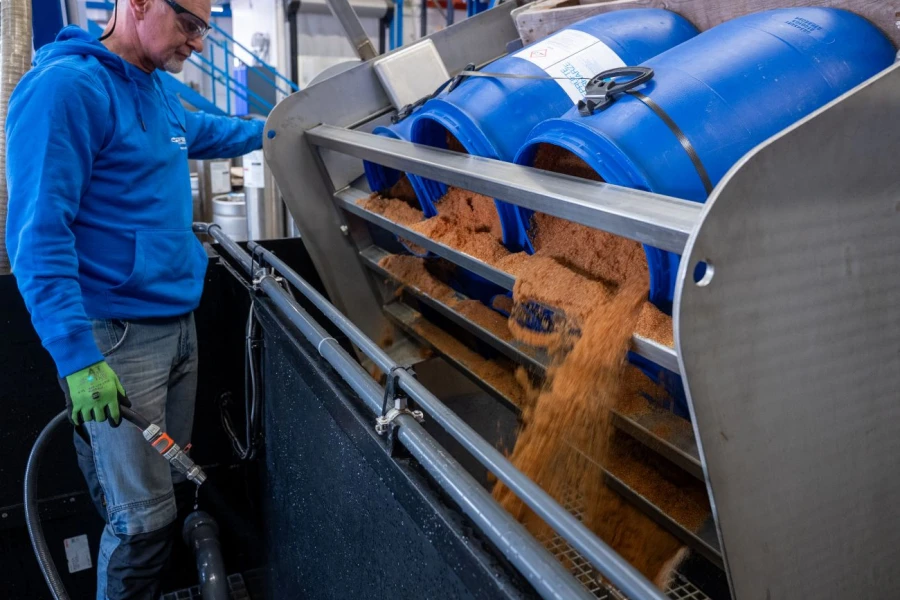
The regeneration of mixed-bed resins is a prime example of an industrial circular economy. Instead of disposing of resins after a single use, they are reprocessed by type and reused. This reusable principle saves raw materials (styrene-divinylbenzene, functional groups), reduces the energy required for new production, and decreases waste. ORBEN regenerates up to 40,000 liters of resin daily – a quantity that would otherwise have to be disposed of as hazardous waste or newly produced.
The rinse water used for regeneration largely comes from the Rhine and is returned after biological treatment and improvement. This reduces the demand for drinking water and produces less wastewater. The acids and alkalis used are consumed as completely as possible and then neutralized. Thanks to precise dosing and modern treatment plants, chemical usage is minimized, thereby reducing environmental impact.
Regenerated resins have a significantly lower CO₂ footprint than new resins. The energy for manufacturing the polymer matrix, sulfonating or aminating the functional groups, and drying is eliminated for regenerated resins. Companies using reusable resin improve their CO₂ footprint and meet the requirements of the EU Taxonomy, which emphasizes resource efficiency and waste prevention. Furthermore, they support the objectives of the German Circular Economy Act. Regeneration stations that use rinse water from surface waters and return neutralized wastewater contribute to water protection.
ORBEN develops products that meet both ecological and economic requirements. THERMION 2035 pH Conform is a mixed bed specifically developed for heating water according to VDI 2035, ensuring a stable pH value. The 25-liter bags with handles simplify filling on construction sites and reduce packaging material. SERASTIL series cartridges feature integrated system disconnectors and water meters, allowing for documentation of make-up water quantities. Color changes indicate when a resin is exhausted, thus supporting the planning of the replacement time. Digital sensors and AI-supported algorithms predict the optimal regeneration time based on historical measurements, thereby reducing unnecessary changes.
A mixed-bed resin cartridge combines the resin with a housing, sieve inserts, and connections for the water line. Depending on the application, there are different sizes and variants: small cartridges (< 6 liters) for laboratories, medium cartridges (10–60 liters) for heating system fillings, and large containers (> 60 liters) for industrial process water treatment. Products like SERASTIL offer integrated system disconnectors, automatic filling valves, and water meters to document filling according to VDI 2035. THERMION cartridges are pH-stabilized and feature a germ barrier. Depending on the series, UNO, DUO, or QUATTRO versions are available, combining one or more resin cartridges in a single frame.
Single-use cartridges appear inexpensive and straightforward at first glance. They are suitable for very small-scale applications where logistics represent the largest cost factor. However, each cartridge generates waste, and the total costs (material, disposal) can quickly escalate. In contrast, reusable cartridges are used multiple times: After replacement, the exhausted resin is taken to the regeneration station, and the cleaned cartridge is refilled. Batch numbers and documented measurements ensure auditability. For larger systems, the reusable concept is generally more economical and ecological.
The ORBEN Resin Express offers a unique on-site service. Trained service technicians nationwide replace exhausted mixed-bed resins directly at the customer's site. The service vehicles are equipped with integrated rinsing and disinfection devices, ensuring the cartridge is cleaned before being refilled with freshly regenerated resin. For cartridges under 60 liters, the customer receives their original vessel back immediately; for larger containers, they receive their own cartridge back at the next exchange. This service is ideal for district heating networks, hospitals, power plants, and industrial process facilities, as it avoids long downtimes.
For projects requiring large quantities of demineralized water in a short time – such as initial filling of district heating systems, during revisions, or in emergencies – ORBEN offers mobile trailer systems. These vehicles combine reverse osmosis, ion exchange, and mixed-bed polishing filters, delivering up to 60,000 liters of ultrapure water per hour, depending on the configuration. Downstream mixed-bed resins ensure that the water's conductivity meets even the stringent requirements of AGFW FW 510 (< 20 µS/cm). Trailer systems enhance project and emergency response capabilities and are an important tool for companies with decentralized facilities.
The choice between regeneration and new purchase, single-use and reusable cartridges, as well as open- or closed-pool regeneration, depends on several factors. The following guide assists in the decision-making process.
A hospital with a heating water volume of 140,000 liters faced the task of renovating its heating network according to VDI 2035 without interrupting ongoing operations. The responsible parties opted for a bypass procedure with inline mixed-bed modules. During the renovation, the heating water was continuously passed through high-performance mixed-bed resin until the conductivity was < 100 µS/cm and the pH value was stabilized in the range of 8.2–10.0. After the treatment was completed, the exhausted resins were transported to the regeneration station and professionally regenerated. The combination of standard compliance, continuous documentation, and sustainable regeneration reduced chemical consumption, lowered the CO₂ footprint, and ensured the hospital's operations.
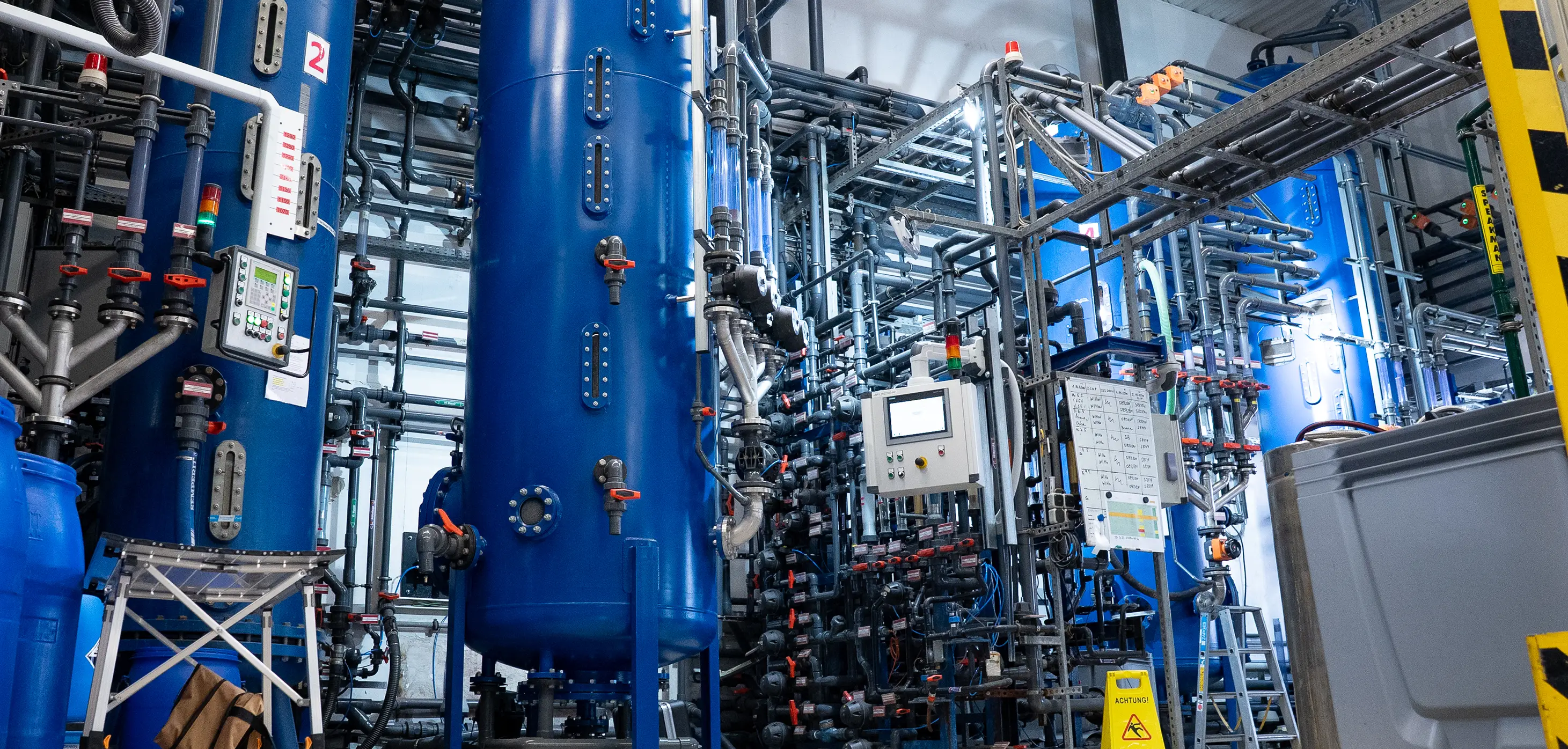
Demands for water purity will continue to rise. Green hydrogen, battery technology, and microelectronics require ultrapure water with conductivities significantly below 0.1 µS/cm. Mixed-bed resins remain indispensable as polishing filters. At the same time, digitalization is gaining importance: Inline sensors record conductivity, pH value, and temperature in real time. AI-supported models predict the optimal regeneration time based on historical measurements, thereby preventing resin regeneration that is too early (cost) or too late (risk). Companies that use such technologies optimize their TCO and increase operational reliability.
The EU Taxonomy and national legislations are increasingly focusing on resource efficiency and waste avoidance. Standards could define stricter limits for trace elements and micropollutants in the future. Modular systems combining reverse osmosis, electrodeionization, and mixed-bed filters offer the necessary flexibility to meet these requirements. ORBEN is positioning itself in this future-oriented industry with its regeneration station, the Harz-Express, and mobile trailer systems.
Mixed-bed resins are a key component for the safe and efficient operation of modern heating, district heating, and process plants. By simultaneously removing cations and anions, they deliver demineralized water that meets the strict limits of VDI 2035 and AGFW FW 510. Regular, professional regeneration not only ensures compliance with standards but also reduces total operating costs and protects the environment.
Companies that rely on reusable resins benefit from a better CO₂ footprint, minimize waste, and meet growing sustainability requirements. With the Harz-Express, mobile trailer systems, and high-quality cartridges like THERMION 2035 pH Conform, ORBEN offers solutions for every need – from rapid on-site regeneration to supplying large-scale projects. The transition to a climate-neutral economy and the increasing demands of the energy transition make mixed-bed resins a technology with a future.


.svg)