Modern heating, local, and district heating networks are at the heart of many industrial and process plants, office buildings, and residential areas. Their smooth operation largely depends on the quality of the heat transfer fluid. The pH value of the heating water influences corrosion rates, scale and sludge deposits, and thus the lifespan of heat exchangers, valves, and pipelines. Bicarbonate, also known as hydrogen carbonate, plays a crucial role here: As a component of what is known as carbonate hardness, it acts as a pH buffer, but under unfavorable operating conditions, it can be converted into carbonate and cause scale formation. Understanding the interaction between bicarbonate, pH value, and plant technology is crucial for asset and operations managers to ensure operational safety, compliance with standards, and low overall costs.
This article illuminates the chemical fundamentals of bicarbonate buffer capacity, explains the normative requirements for heating water according to VDI 2035 and AGFW FW 510, analyzes causes for pH drift, and explains why too much or too little buffer capacity can be equally problematic.
The primary persona for this article consists of asset and operations managers for heating networks, energy, and process plants. They are responsible for the safe and efficient operation of complex heating and cooling circuits. Their priorities include operational safety, compliance with standards (VDI 2035, AGFW FW 510), documentation, auditability, total operating costs, and sustainability. The secondary persona comprises HVAC professionals and building services planners who design, install, and maintain systems. Both groups require reliable information on limit values, measurement methods, and legal frameworks.
The relevant content hubs that this article draws upon are "Ion Exchangers and Regeneration", "Heating Water and Regulations", "Mobile Water Treatment and Trailer Systems", "Pure and Ultrapure Water for Energy Transition Industries", and "Sustainability and Reusable Resin". The topic of bicarbonate buffer capacity bridges these hubs: It requires knowledge of ion exchange processes, heating water standards, mobile water treatment during filling processes, and the sustainable handling of resins.
Bicarbonate (HCO₃⁻), also known as hydrogen carbonate, is the anion of carbonic acid. In the ORBEN Water ABC, it is described as a component of carbonate hardness, with a note that it is removed during decarbonization Together with calcium and magnesium ions, bicarbonate forms soluble salts such as calcium bicarbonate. The pH value of the water determines the equilibrium between carbonic acid, bicarbonate, and carbonate. This system acts as a natural buffer: when acids or bases are added, the carbonic acid-bicarbonate-carbonate system can absorb pH changes.
In water, the following chemical equilibria exist: Carbon dioxide (CO₂) dissolves in water and forms carbonic acid (H₂CO₃). This can release a proton and become bicarbonate (HCO₃⁻). At higher pH values, bicarbonate releases another proton and forms carbonate (CO₃²⁻). This equilibrium is reversible and pH-dependent. The Membranworks publication on the carbonate-bicarbonate equilibrium describes the sequence CO₃²⁻ + H⁺ ↔ HCO₃⁻ ↔ H₂CO₃ ↔ CO₂ + H₂O and emphasizes that at high pH values above 8.5, bicarbonate increasingly converts to carbonate. This equilibrium controls the water's buffer capacity: the more bicarbonate is present, the more stable the pH value remains, as long as the reactions are in equilibrium. At the same time, a high bicarbonate content means that with changes in temperature or pressure, a lot of carbonate can form, which, together with calcium ions, creates insoluble calcium carbonate (scale).
In the pH spectrum, typical ranges are easy to understand: pure, neutral water has a pH value of 7; acidic solutions are below that, alkaline solutions above. The ORBEN Water ABC explains how the pH scale works using examples such as cola (pH ≈ 2.5) and soap (pH ≈ 10). Measuring the pH value in very pure water is challenging because low conductivities lead to high resistances – an aspect that must be considered when evaluating heating water with very low conductivity.
Buffer capacity describes a water's ability to maintain a stable pH value despite the addition of acid or base. Bicarbonate is the central buffer in the neutral and slightly alkaline range. In heating water, this buffer system is a double-edged sword: on the one hand, it prevents spontaneous pH fluctuations upon contact with metals, lubricants, or other substances. On the other hand, when heated or depressurized, it leads to the formation of carbonate and thus to scale deposits.
When acidic components (e.g., from corrosion or condensates) enter a heating system, they react with carbonate and bicarbonate and are neutralized. CO₂ is released in the process, which transitions into dissolved or gaseous form. Conversely, the addition of bases (e.g., ammonia from corrosion inhibitors) causes bicarbonate to be deprotonated into carbonate. Both reactions keep the pH value in the range of 8 to 9. However, if the buffer capacity is exhausted – either by removing bicarbonate (e.g., during demineralization) or by complete conversion to carbonate – even small additions can significantly shift the pH value. A pH value that is too low (< 8) intensifies acid corrosion, while a pH value that is too high (> 10) leads to the passivation of some metals and to scale formation.
During softening (complete softening), calcium (Ca²⁺) and magnesium (Mg²⁺) cations are replaced by sodium (Na⁺). This eliminates hardness, while the bicarbonate concentration and electrical conductivity remain essentially unchanged. The ORBEN article on conductivity explains that during complete softening, conductivity remains high and the pH value regulates itself "automatically" because bicarbonate acts as a natural buffer.
In contrast, during demineralization (DM), all dissolved ions – both cations and anions – are removed from the water using ion exchange or reverse osmosis. As a result, conductivity and buffer capacity drop drastically. The pH value of demineralized water is initially undefined because CO₂ is absorbed from the environment. Since no buffer ions are present, it can move towards neutral (7) or fluctuate slightly. As the ORBEN article emphasizes, when operating with low salt content (DM water), the pH value must be actively adjusted and monitored.
For operators, this means: if the heating water is softened, the bicarbonate buffer is retained. The water possesses a certain alkalinity that cushions pH fluctuations but can also potentially cause scale to precipitate. During demineralization, ion concentration and pH value must be actively monitored and adjusted with dosed buffer substances.

Normative specifications define the permissible pH ranges and maximum ion concentrations to prevent corrosion and deposits. In Germany, VDI Guideline 2035 is the central regulation for water quality in closed hot water heating systems. It distinguishes between low-salt and high-salt operation. For low-salt operation, it prescribes electrical conductivities between 10 µS/cm and 100 µS/cm and recommends demineralized water, as only the pH value and conductivity then need to be monitored. The permissible pH range depends on the materials used: systems without aluminum may have a pH between 8.2 and 10.0, while for systems with aluminum, 8.2 to 9.0 applies.
For high-salt operation, VDI 2035 permits higher conductivities up to 1,500 µS/cm. In this case, the buffer capacity is often derived from the natural bicarbonate in the fill water. However, high conductivities and alkalinity are only common in very large volumes and central networks, as they increase the risk of scale formation, corrosion, and microbial activity.
AGFW Worksheet FW 510 applies specifically to district heating networks. It requires even lower conductivities for low-salt operation. Typically, hot water district heating networks require conductivities of 10 – 30 µS/cm and pH values between 9.0 and 10.0. For high-salt operation, conductivities up to 1,500 µS/cm are permissible, but only for large networks with several hundred cubic meters of heating water.
A supplementary source from FlowCon International confirms the VDI limits: According to VDI 2035, it recommends a conductivity < 100 µS/cm, a pH value of 8.2 – 10.0, and an oxygen content up to 0.1 mg/l. Adherence to these limits, combined with low turbidity, minimizes the content of alkaline earth metals and reduces the risk of deposits.
The guidelines also emphasize the documentation requirement: operators must regularly measure and document conductivity, pH value, and hardness, and take corrective action in case of deviations. Manufacturers of heat generators explicitly require demineralized or at least softened fill water; otherwise, the warranty becomes void. For the safe filling of the system, DIN EN 1717 must also be observed: heating water is considered a Category 3 or 4 fluid and may only be fed into the drinking water network via approved system disconnectors.
In practice, the pH value of heating water does not automatically remain stable. Various physical and chemical processes can raise or lower the pH value. The ORBEN technical article "pH Value in Heating Water: Standards, Limits & Effective Measures" lists several causes:
These mechanisms illustrate that the pH value cannot be considered in isolation during operation. Bicarbonate acts as a buffer but is itself part of the reaction: during CO₂ degassing, HCO₃⁻ becomes CO₃²⁻, the buffer capacity decreases, and carbonate precipitates as calcium carbonate. Conversely, when acids are formed, bicarbonate is consumed, the buffer capacity is depleted, and the pH value can drop into the corrosive range.
The main cause of scale formation (limescale) in heating systems is the conversion of bicarbonates into carbonates and their reaction with calcium ions. A technical memo from Vanguard Industries describes the instability of calcium bicarbonate: when heated or depressurized, Ca(HCO₃)₂ decomposes into calcium carbonate (CaCO₃), carbon dioxide, and water. Calcium carbonate has low solubility (approx. 15 mg/l), whereas calcium bicarbonate is highly soluble (166,000 mg/l). This conversion is accelerated by increased temperature, CO₂ degassing, and a rise in pH.
The Membranworks study adds that at high pH values (> 8.5), the equilibrium shifts from bicarbonate to carbonate. Carbonate then immediately reacts with calcium ions to form calcium carbonate. This deposits on heat exchanger surfaces, thermally insulates them, increases energy consumption, and can clog pipelines.
Other salts can also precipitate: At high pH values, magnesium hydroxide sludges form, and the hydroxide or carbonate ions of other alkaline earth metals react to form sparingly soluble compounds. FCT Water points out that high water hardness, elevated temperatures, and pH imbalance promote the precipitation of carbonate and hydroxide salts. In closed heating systems, lime deposits are particularly relevant.
The key takeaway is: The higher the bicarbonate content and pH value, the greater the potential for scale formation. Complete removal of bicarbonate through demineralization reduces this risk but requires active pH management. Pure softening leaves bicarbonate in the water. Despite reduced hardness, lime can precipitate if the carbonate equilibrium shifts at high temperatures.
The buffer capacity of heating water is indirectly determined by its acid-binding capacity (SBV), alkalinity, and bicarbonate concentration. Precise measurements are crucial for compliant operation. The ORBEN article "pH Value in Heating Water" describes various measurement methods: Test strips are inexpensive but inaccurate and only suitable for rough indications. Calibrated pH meters with temperature compensation are more reliable. For calibration, the article recommends a three-point calibration at pH 4, 7, and 9 and emphasizes that samples should be measured at 25 °C. Inline sensors enable continuous monitoring and digital documentation, which is essential for auditability.
The bicarbonate concentration itself is usually determined via the acid capacity up to pH 4.3 (Ks 4.3). The result is given in mmol/l or °dH (German degrees of hardness). To predict potential scale formation, the Langelier Saturation Index (LSI) is used, which links pH, temperature, hardness, and alkalinity. Asset managers should regularly record such parameters and evaluate trends to intervene early.
Professional analysis of buffer capacity requires expertise, laboratory equipment, and experience with heating systems. As a system provider, ORBEN offers a complete package: Mobile sampling kits collect representative samples from the heating circuit, which are then analyzed in ORBEN's own laboratory. In addition to determining the pH value, conductivity, total hardness, bicarbonate content, and acid capacity are analyzed. The results are compared with the limit values of VDI 2035 and AGFW FW 510 and presented graphically. In case of deviations, the specialists recommend specific measures – from resin regeneration and salinization to the dosing of buffer substances – and document the results in a plant logbook. This procedure fulfills the documentation requirement and creates the basis for auditability.
In addition to its stationary laboratory, ORBEN also offers mobile trailer systems for filling and flushing large heating networks. Online measuring devices allow pH value, conductivity, and temperature to be monitored and documented during operation. An experienced field service team assists with the interpretation and implementation of measures. This provides asset managers with reliable decision-making support for optimizing their systems.
A pH value that consistently falls below the 8.2 – 10.0 or 8.2 – 9.0 required by VDI 2035 is a warning sign. It indicates that the buffer capacity is exhausted or that acid-forming substances predominate. Long-term stability requires a multi-stage approach:
The choice of measures depends on the system size, material composition (steel, copper, aluminum), and available budget. Consultation with ORBEN experts ensures that the solutions are compliant with standards and cost-effective.
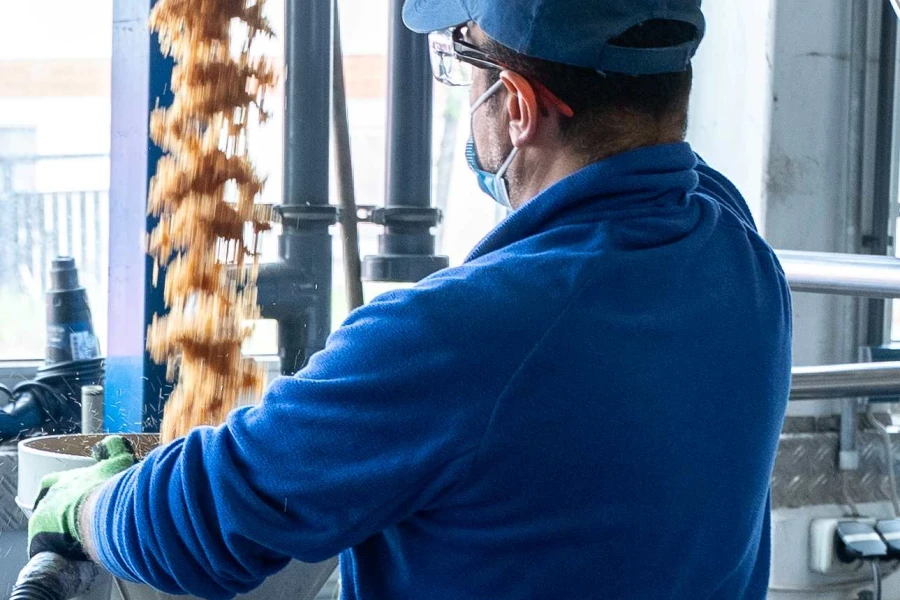
The decision between demineralization and softening directly affects the bicarbonate concentration. During softening, calcium and magnesium are exchanged for sodium. Electrical conductivity and bicarbonate content remain almost unchanged; thus, the buffering capacity is maintained, and the pH value regulates itself "automatically." However, this also means that bicarbonate, which causes scale formation, remains in the system.
Demineralization, on the other hand, removes all ions. As a result, conductivity drops to the range of 10 – 30 µS/cm (AGFW FW 510) or below 100 µS/cm (VDI 2035). The bicarbonate concentration approaches zero; there is no longer any natural buffering capacity. The pH value must be actively adjusted; otherwise, it can drop into the acidic range due to CO₂ absorption.
The choice of treatment method depends on the application:
Generally, demineralization provides higher operational reliability because scale formation is virtually eliminated, and only two parameters (pH and conductivity) need to be monitored. However, it leads to higher investment and operating costs and requires regular regeneration of the resins. Softening is more cost-effective and easier to operate, but it carries the risk of scale formation and requires stricter monitoring.
In low-salt operation (conductivity < 100 µS/cm), the pH value primarily depends on the low residual content of dissolved ions. Since natural buffering by bicarbonate is practically absent, the pH value must be actively adjusted and monitored. The following measures are crucial for this:
With these measures, the pH value can be maintained between 8.2 and 10.0 in low-salt operation. ORBEN offers suitable mixed-bed cartridges, alkalization filters, and control technology, tailored to the respective system.
The formation of scale (limescale) depends on three factors: the content of calcium and magnesium ions, the bicarbonate content, and the pH and temperature profile. Modern hot water heating systems often feature high flow temperatures (sometimes > 80 °C) and pressure fluctuations. These conditions promote the conversion of bicarbonate into carbonate.
As the technical memo from Vanguard Industries shows, calcium bicarbonate decomposes into calcium carbonate, CO₂, and water when heated. This process is reversible, but when CO₂ escapes, the sparingly soluble calcium carbonate remains. Simultaneously, a high pH value shifts the equilibrium towards carbonate. In modern systems, alkaline pH values of 8.2 – 10 are often aimed for due to energy efficiency, which promotes carbonate formation.
Furthermore, as the pH value increases, the carbonate concentration in the form of CO₃²⁻ rises. This reacts with Ca²⁺ to form CaCO₃. If full demineralization does not occur, Ca²⁺ remains present in the softened water and forms deposits in combination with carbonate. Therefore, bicarbonate is not only a buffer but also the precursor to scale formation.
The conditions listed in FCT Water – high hardness, elevated temperature, evaporation, and pH imbalance – are frequently present in hot water heating systems. Even if hardness is reduced, bicarbonate remains as a potential scale former during softening. Only through full demineralization is this substance removed.
In summary: Bicarbonate is primarily responsible for scale formation because it decomposes into carbonate when heated; carbonate reacts with calcium to form sparingly soluble calcium carbonate; high pH values and temperatures accelerate these processes; modern heating systems often operate in the alkaline range, where this mechanism is particularly effective.
The choice of treatment method affects not only water quality but also operating costs and sustainability. Disposable filling cartridges provide fully demineralized water for a limited quantity (e.g., 300 liters at 14 °dH) and are then disposed of. They are practical for one-time fillings or emergencies but generate waste and ongoing costs. In contrast, reusable resin systems allow for the regeneration of exhausted resins. The ORBEN regeneration station sorts the resin fractions, treats them with acid and lye, rinses them, and remixes them. This allows ion exchangers to be used multiple times, improving the ecological balance and reducing total operating costs.
Mobile trailer systems expand capacity: They enable fast and flexible on-site treatment of large water volumes and reduce downtime. For network operators who need to replenish large volumes in an emergency, the availability of such a trailer is an important factor for project and emergency readiness.
Finally, digitalization and documentation also contribute to sustainability: Online sensors, database-supported system logs, and transparent reports facilitate audits and prevent costly consequential damages. Those who can demonstrate standard-compliant water quality reduce warranty risks and extend the lifespan of their system.
Bicarbonate plays an ambivalent role in heating water: As the most important buffer, it stabilizes the pH value, but on the other hand, it is the precursor to scale formation. VDI Guideline 2035 and AGFW Worksheet FW 510 specify clear limit values for conductivity, pH value, and hardness, while other sources emphasize the importance of low oxygen content and turbidity. The choice between softening and full demineralization determines whether bicarbonate remains in the system or is removed. pH drift arises from CO₂ degassing, corrosion, additive decomposition, and other factors; it necessitates regular analysis, documentation, and readjustment.
For asset and operations managers, the conclusion is clear: Only those who understand the chemical principles and consistently adhere to standards can achieve operational safety, energy efficiency, and sustainability. ORBEN supports this with analysis services, regeneration, mobile treatment systems, and expert consulting. In the long term, water quality requirements will continue to rise, for example, due to advancing electrification (heat pumps), the use of new materials, and stricter environmental regulations. Therefore, it is worthwhile to view buffer capacity not as a static measure, but as a dynamic process that must be continuously monitored and adjusted.


.svg)