Heating, process, and district heating systems are caught between rising energy costs, strict environmental regulations, and the demand for maximum operational reliability. Anyone responsible in the energy and process industry knows: the water quality in the system determines efficiency, service life, and legal compliance. Standards such as VDI 2035 and AGFW Worksheet FW 510 define limit values for the conductivity, pH value, and oxygen content of heating water. They require professional documentation and regular measurements to prevent corrosion damage and scale deposits.
Demineralized or fully deionized water with a conductivity below 100 µS/cm (or below 10 µS/cm for low-salt operation) and a pH value of 8.2 – 10.0 is, according to VDI 2035, a prerequisite for low-corrosion operation. For district heating networks, AGFW Worksheet FW 510 sets even stricter criteria: the conductivity of the filling water must be < 20 µS/cm, the silicic acid concentration < 0.5 mg/l, and the pH value ≤ 7. These standards ensure that operators must plan water treatment with the utmost care.
Mixed-bed resins play a key role in this: They consist of a mixture of strongly acidic cation exchange resins and strongly basic anion exchange resins in a ratio of approximately 40% to 60%. When used as "polishing filters" after reverse osmosis systems or as deionizing cartridges, they remove both cations and anions from the water, thereby producing demineralized or high-purity water with very low conductivity. After some operating time, the ion exchange resins are exhausted, the electrical conductivity of the effluent rises above the limit values, and it is high time for regeneration.
However, mixed-bed resin regeneration is not a trivial process that can be done casually. Chemicals, separation of resin fractions, long rinsing times, and strict environmental regulations make the process complex and dangerous for untrained personnel. At the same time, a trend towards sustainable reusable resins has developed in recent years, where the resin is returned after use, professionally reprocessed, and reused. This article not only explains how the regeneration process works but also places it in the context of operational requirements, legal standards, and total cost of ownership. The goal is to provide you with a solid basis for decision-making to implement projects, emergencies, and revisions efficiently and in compliance with standards.
Mixed-bed resin is an ion-selective granulate consisting of two different types of resin: a strongly acidic cation exchanger and a strongly basic anion exchanger. Both resin fractions are physically mixed, with the ratio – depending on the manufacturer – often being 40% cation exchanger and 60% anion exchanger. This combination allows for the removal of both positively charged ions (cations such as calcium, magnesium, sodium, potassium, etc.) and negatively charged ions (anions such as chloride, sulfate, nitrate, bicarbonate, etc.) from the water.
Unlike classic two-column ion exchangers, where one stage binds cations and a second stage binds anions, mixed-bed resin performs both tasks simultaneously. This means that at the end of the treatment, almost pure water remains, consisting solely of H₂O molecules. The resin beads are chaotically mixed in the cartridge or cylinder; during operation, the different particle sizes can easily separate due to density differences. Nevertheless, the quality of the mixture remains crucial for the process throughout the resin's lifespan.
Mixed-bed resins are used in numerous areas. In heating systems, they play a central role in filling and replenishment according to VDI 2035. Since electrolyte removal from the filling water is mandatory here, all ionogenic substances contained in drinking water must be removed. VDI 2035 distinguishes between low-salt operation (< 100 µS/cm) and high-salt operation (> 100 µS/cm up to 1500 µS/cm). Since the probability of corrosion decreases with decreasing conductivity, VDI 2035 recommends low-salt operation with demineralized filling water.
In district heating networks evaluated according to AGFW FW 510, the requirements are even stricter. District heating pipeline networks are typically filled with deionized water (< 20 µS/cm). Simple softening is not sufficient here – complete deionization must be carried out to remove silicic acid (SiO₂) and other inorganic residues. Mixed-bed resins are therefore used in combination with reverse osmosis or electrodialysis (EDI) to "polish" the water in the final step, demineralizing it and achieving a conductivity of < 0.2 µS/cm.
Further applications are found in the process and energy transition industries: In the production of green hydrogen, in battery manufacturing, in electrical testing facilities, in laboratories, and in steam boilers and heat exchangers in the food and pharmaceutical industries. All these applications share the requirement that impurities in the water can lead to production disruptions or damage to expensive equipment.
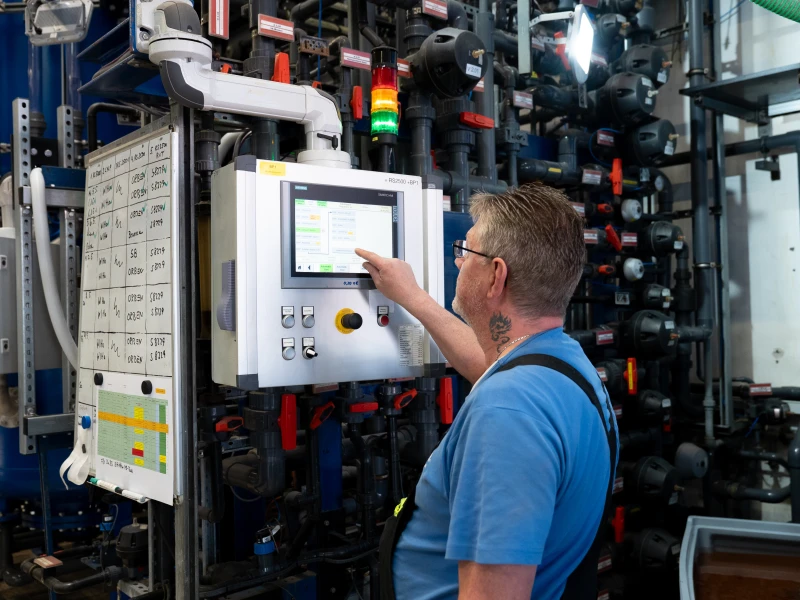
The need for mixed-bed resin regeneration is determined in practice by measuring the conductivity at the resin outlet. As long as the conductivity value is below 1 µS/cm, the mixed-bed exchanger generally operates within the ideal range. However, if the conductivity rises to 3 – 5 µS/cm, the resin is considered exhausted. For heating system fillings according to VDI 2035, the standard has already been exceeded at this point. At this point, at the latest, the mixed-bed resin must be replaced or regenerated.
Regeneration is usually more economically advantageous than a complete replacement with new resin. New resins are significantly more expensive due to raw material prices and energy-intensive production. At the same time, the price per liter of resin decreases when larger quantities are regenerated together, as chemicals and process times are utilized more efficiently. In large heating or process plants, several hundred liters of mixed-bed resin can be treated in a single batch. This not only saves costs but also protects the environment, as less "virgin resin" needs to be produced and the used resin remains in the raw material cycle.
In addition to economic motives, standard compliance plays a central role. VDI 2035 obliges operators and planners to regularly monitor and document water quality; the plant logbook must be updated with every maintenance. If individual parameters fall below or exceed the limit values, the specialist company is liable in case of damage. Especially for systems with aluminum components, the pH value must not exceed 8.5, otherwise, you risk localized pitting corrosion. Timely regeneration thus ensures compliance with the standard and protects against warranty risks.
Sustainability has become a strategic decision-making factor for many companies. The use of reusable resin reduces waste, conserves resources, and lowers the CO₂ footprint. ORBEN operates Europe's largest regeneration station, regenerating up to 40,000 liters of resin per day. Through single-grade regeneration and precise batch tracking via batch numbers, each resin can be returned to its respective customer pool after processing. This circular economy conserves resources, reduces the amount of residue, and minimizes the use of fresh water, as the facility uses Rhine water for rinsing and returns it biologically improved.
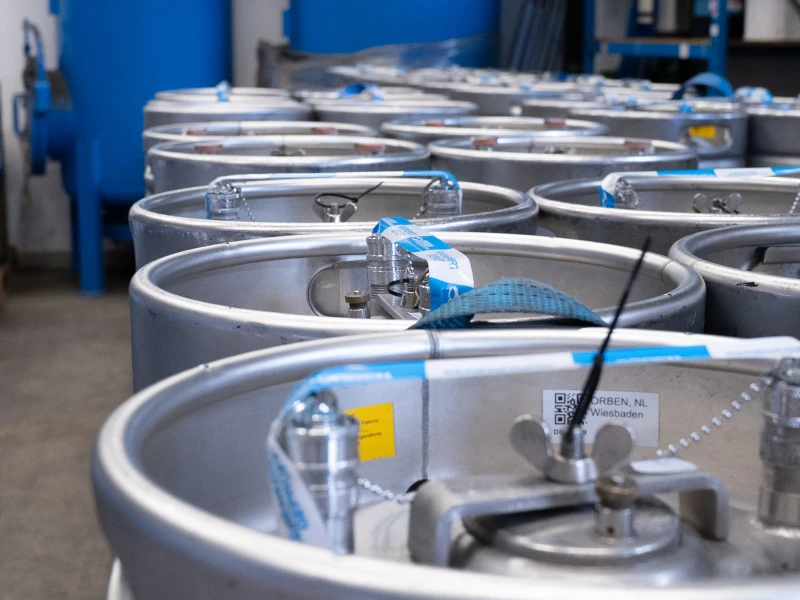
Regeneration means restoring exhausted ion exchange resins to their original functional form (H⁺ and OH⁻ forms) so they can once again absorb ions from water. The process is standardized in industrial plants, guaranteeing high purity and repeatability.
Before the resin undergoes regeneration, its degree of exhaustion is determined. This includes measuring conductivity at the resin outlet and visually inspecting for discoloration or foreign matter. In heating water cartridges or industrial mixed-bed filters, conductivity values > 3 µS/cm indicate that the capacity is exhausted.
During preparation, the resin is removed from its cartridge and transferred to the regeneration plant. For smaller cartridges (< 60 liters), this is done directly on-site by ORBEN Resin Express; for larger containers, the cartridges are brought to the regeneration station.
Since cation and anion resins require different chemicals for regeneration, the resin fractions must first be separated. The differing densities of the resins are exploited: targeted backwashing and hydraulic flow create stratification, causing the heavier cation resin to sink and the lighter anion resin to float. In professional systems, this step is supported by controlled upward flow, ensuring rapid, single-grade separation.
After separation, the resin fractions are each treated with the appropriate chemical. The strongly acidic cation exchanger is regenerated with hydrochloric acid (HCl) and converted to the H⁺ form, while the strongly basic anion exchanger is treated with caustic soda (NaOH) to restore the OH⁻ form. In modern counter-current systems, the acid or caustic is introduced from below and slowly penetrates the resin bed, effectively displacing exhausted ions. Concentration and contact time are precisely controlled; insufficient dosing leads to residual loading, while excessive dosing wastes chemicals and harms the environment.
After chemical regeneration, the regenerating reagents must be completely washed out. First, a slow rinse displaces excess acid or caustic. Subsequently, the resin is thoroughly rinsed with deionized water until the conductivity of the rinse water is below 1 µS/cm again. At ORBEN , Rhine water is largely used for this purpose and is returned biologically improved after treatment. The resulting rinse effluent is neutralized and disposed of; legally compliant wastewater treatment is mandatory.
After separate regeneration, the resin fractions are mixed together again. In open pool regeneration, multiple batches are combined to increase volume and thus enhance economic efficiency. Each cartridge receives a share back corresponding to its volume; any losses due to aging are compensated with fresh resin. For particularly demanding applications, such as in the semiconductor industry or for Ultra-Pure Water (UPW) in hydrogen and battery manufacturing, closed-pool regeneration is available. Here, the resin is regenerated exclusively with its own batch to ensure the highest purity.
Regeneration only concludes once the resin has achieved the required quality. For this purpose, samples are taken and analyzed in the laboratory: conductivity, silicic acid, Total Organic Carbon (TOC), and potentially trace metals are checked. Each batch receives a batch number, regeneration date, and proof of conductivity value. This information is documented, allowing customers seamless traceability of their cartridge – an important criterion for auditability.
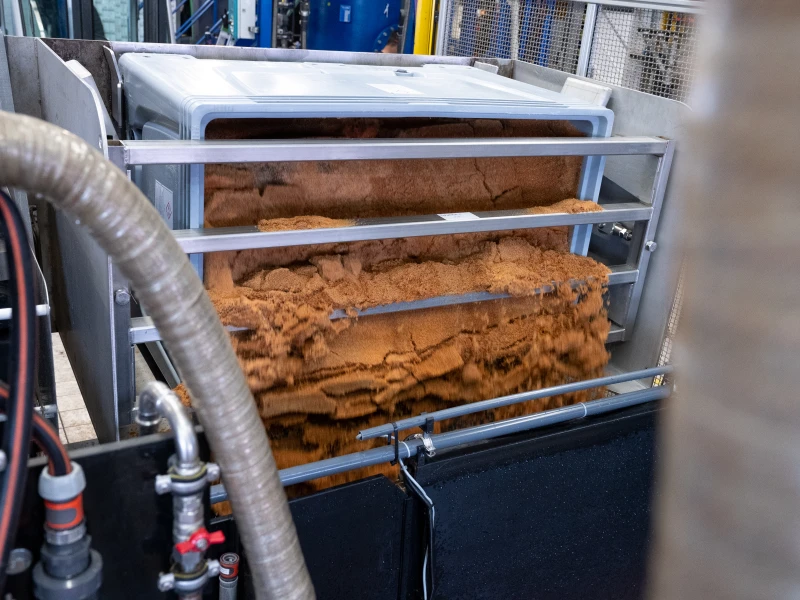
The regeneration price depends on several factors. Therefore, a flat per-kilogram price is not very informative. The following aspects determine the costs:
Not every mixed-bed resin is identical. High-purity resins for the semiconductor industry or for producing ultra-pure water are more expensive to purchase and require stricter regeneration processes. In the heating sector, resins specifically adapted to the pH range of heating water are often used. For example, ORBEN offers THERMION 2035 pH Conform, a high-performance mixed bed that supports an ideal pH value in heating systems and is available in practical 25 L PE bags. Regeneration prices vary depending on the resin mixture, as different chemicals and rinsing times are required.
The more liters of resin processed in a batch, the lower the price per liter. This is due to economies of scale in the use of chemicals, energy, and personnel. For very small cartridges (< 6 liters), logistics are often the largest cost factor, as transport and handling costs exceed the chemical process costs. In such cases, using disposable cartridges may be worthwhile – especially in laboratory settings – whereas in industrial environments, reusable cartridges with on-site regeneration are significantly more economical.
Transport from the site of use to the regeneration station and back significantly impacts overall costs. ORBEN maintains nine service locations and over 30 service vehicles throughout Germany. This nationwide network allows for short response times and reduces costs for the customer. With the Harz-Express , the cartridge is exchanged directly on-site, eliminating the need for a second trip. Especially in critical applications – e.g., in operational process plants or heating networks – this service minimizes downtime.
The choice between open- and closed-pool regeneration significantly impacts costs. Closed-pool regenerations require larger quantities, longer rinsing times, and thus higher efforts. However, they guarantee maximum purity – a crucial factor for semiconductor manufacturing, ultrapure water in battery cell production, and pharmaceutical processes. Operators of such systems must therefore weigh whether the quality advantage justifies the additional costs.
Regeneration is often combined with other services. For example, ORBEN service vehicles thoroughly clean cartridge housings and disinfect them with appropriate agents. Minor repairs are carried out directly on-site to ensure the cartridge functions perfectly during its next use. These additional tasks increase the effort but extend the lifespan of the systems and reduce the risk of microbial contamination.
The VDI 2035 guideline is the central regulatory framework for closed heating systems in Germany. Its core objectives are to prevent scale formation and water-side corrosion damage. With regard to conductivity, VDI 2035 Part 1 distinguishes between low-salt operation (> 10 µS/cm to ≤ 100 µS/cm) and salt-containing operation (> 100 µS/cm to ≤ 1500 µS/cm). Since the probability of corrosion decreases with decreasing conductivity, low-salt operation is preferred in practice. Demineralized fill water, often produced with mixed-bed exchangers, is required for low-salt operation.
In operation, VDI 2035 permits a conductivity of up to 100 µS/cm, an oxygen content of < 0.1 mg/l, and a pH value between 8.2 and 10.0. However, for systems with aluminum components, the pH value should not exceed 8.5. Furthermore, the guideline requires that the plant logbook be updated during each maintenance and that all water treatment measures, including measured values, be documented.
While VDI 2035 primarily targets heating systems up to 100 °C, additional requirements apply to district heating networks. The AGFW FW 510 worksheet specifies that the fill water must have an electrical conductivity of < 20 µS/cm, a silicic acid concentration of < 0.5 mg/l, and a pH value of ≤ 7. These values are necessary to protect the circuit from corrosion and prevent contamination in heat exchangers. In practice, the fill water is therefore almost always fully demineralized, often through a combination of reverse osmosis, electrodeionization, and subsequent mixed-bed polishing.
The guidelines emphasize that the operator is responsible for the heating water, although they often delegate these tasks to an HVAC specialist. Planners, system builders, and operators must ensure that all measurements and maintenance are documented. If the pH value is not within the required range of 8.2 to 9.0 during inspection (typically 8–12 weeks after filling), conditioning with suitable buffering agents is necessary. Failure to comply can lead to performance loss, corrosion damage, and, in the worst case, warranty and liability claims.
The preceding chapters have shown how complex mixed-bed resin regeneration is and what normative requirements must be met. ORBEN offers its customers solutions precisely tailored to these requirements.
With a capacity of up to 40,000 liters of resin per day, ORBEN operates the largest regeneration station in Europe. Here, all common ion exchangers, including mixed-bed resins, are processed. The plant operates in multiple stages, with each batch processed separately by type once the quantity reaches 2,500 liters. The resins undergo all phases of regeneration – separation, acid and alkali treatment, rinsing, mixing – under strictly controlled conditions.
A special feature is the dedicated regeneration: Customers receive, upon request, precisely the resin they supplied. This is particularly crucial for ultrapure water manufacturers, as it eliminates potential contamination by foreign resins. Each cartridge is assigned a batch number and the filling date is documented, ensuring traceability at all times.
In terms of sustainability, ORBEN sets standards: The rinse water comes from the Rhine and is biologically improved before being returned. This way, the company reduces drinking water consumption and contributes to water protection. Furthermore, large-scale neutralization plants are available to neutralize acid-alkali mixtures in an environmentally sound manner.
For operators who do not wish to dismantle or send in their cartridges, ORBEN offers a unique mobile regeneration service. The Resin Express exchanges spent mixed-bed resins for freshly regenerated resins directly on-site. The service vehicles are equipped with integrated rinsing and disinfection devices, allowing the cartridge to be cleaned on-site. For smaller cartridges (< 60 liters), the customer immediately receives their original vessel back; for larger units, they receive the same cartridge at the next exchange.
This service is ideal for operators who cannot afford transport and waiting times – such as those in district heating networks, hospitals, power plants, or industrial process facilities. Personal contact with trained service technicians, who also carry spare parts for minor repairs, guarantees seamless support.
A special product from ORBEN is THERMION 2035 pH Conform, a ready-to-use mixed-bed resin with an optimal mixing ratio, specifically developed for heating water according to VDI 2035. The resins are packed in PE bags with handles, making it easy to fill heating cartridges even on construction sites. The defined mixture and high exchange capacity ensure a long service life and stable pH value in the heating water circuit.
For large projects requiring tens of thousands of liters of demineralized water within a short period, ORBEN offers mobile trailer systems. The trailers are equipped with reverse osmosis and ion exchangers and, depending on the model, deliver up to 60,000 liters per hour. They are suitable for filling heating networks, district cooling systems, industrial plants, or as an emergency supply in case of unplanned outages. Downstream mixed-bed filters in the trailer systems ensure that the water's conductivity is suitable even for AGFW-FW 510 operation (< 20 µS/cm).
To ensure standard-compliant filling and subsequent operation, ORBEN also offers measurement and testing technology. Conductivity and pH meters with temperature compensation enable precise control of water quality. Additionally, magnetite separators are available for the heating circuit, which keep corrosion products out of the system. The combination of these components ensures that the treated water remains standard-compliant throughout its entire lifecycle. Furthermore, customers can use the Service & Rentalofferings to temporarily rent systems, for example, during overhauls or in emergencies.
A practical example illustrates how mixed-bed resin regeneration, standards, and ORBEN service work together. The Evangelical Diakonissenkrankenhaus Leipzig had to remediate 140,000 liters of heating water according to VDI 2035 without interrupting ongoing operations. Using a bypass process, ORBEN INLINE SELECT modules filled with high-performance mixed-bed resin were employed. During ongoing operation, the heating water was continuously circulated through the modules until the desired conductivity and pH value were achieved.
It was crucial to consider the VDI 2035 specifications: The heating water's conductivity had to be < 100 µS/cm, and the pH value needed to be stabilized in the range of 8.2–10.0 after treatment. Continuous measurement and documentation in the plant logbook ensured that the limit values were consistently met. After treatment was completed, the spent resins were transported to the ORBEN station for regeneration. The operator benefited from a sustainable solution with low chemical usage and maximum operational reliability.
Several criteria play a role when deciding whether resin should be regenerated or replaced. Here are some guidelines:
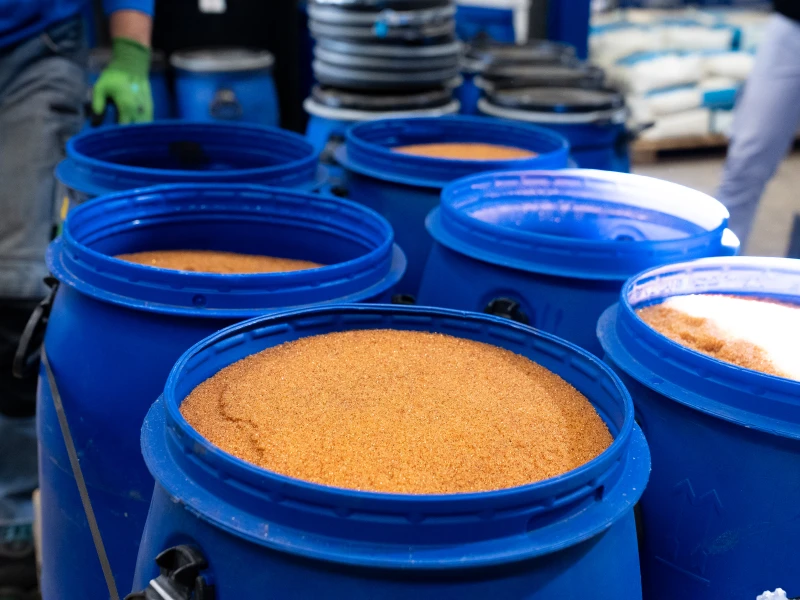
Looking ahead, it's clear that the demands for ultrapure water will continue to rise. Green hydrogen, fuel cells, battery manufacturing, and microelectronics require ultra-pure water with conductivities well below 0.1 µS/cm. Mixed-bed resins are used as the final polishing stage to remove trace ions from the water. ORBEN positions itself in this future market with its products and services, offering closed regeneration pools and providing mobile systems that can produce laboratory-grade ultrapure water on-site.
The regeneration of mixed-bed resins is far more than a standard chemical process – it is a crucial component for the safe and efficient operation of modern heating and process systems. Standards such as VDI 2035 and AGFW FW 510 define clear limit values for conductivity, pH, and oxygen content, making the documentation of water quality mandatory. Professional regeneration ensures that these requirements are met and protects against costly damage from corrosion or scale deposits.
At the same time, regeneration is an important lever for reducing the Total Cost of Ownership: Having high-quality mixed-bed resin regenerated in large batches saves money compared to buying new, extends the lifespan of cartridges, and reduces downtime. The environment benefits from the multiple use of the resin and the reduced consumption of resources.
With its largest regeneration station in Europe, the mobile Resin Express Service, high-quality mixed-bed resins like THERMION 2035 pH Conform, and mobile trailer systems, ORBEN offers an integrated portfolio specifically aimed at asset and operations managers. The company's expertise and strict adherence to standards build trust and protect operators against liability risks. Leverage this expertise to operate your systems efficiently, sustainably, and in compliance with standards.


.svg)