In closed heating, district heating, and process water systems, the circulating water performs many functions: It transports heat, serves as a heat transfer medium, and protects the system by creating a stable electrochemical environment. A key characteristic of this environment is the pH value. It influences corrosion processes, the formation of protective layers on metal surfaces, the precipitation of scale, and the proliferation of microbial organisms. In the VDI Guideline 2035 and in the AGFW Worksheet FW 510 , limit values are defined that ensure operational safety and compliant system operation. However, modern materials such as aluminum, copper, stainless steel, and composite materials react with varying sensitivity to the pH value, meaning the choice of the optimal range is situation-dependent. The correct setting protects against corrosion, extends the system's lifespan, and minimizes total operating costs by avoiding unplanned repairs and downtime.
This article is aimed at asset and operational managers for heating networks, energy, and process plants, to HVAC/plumbing professionals , and to MEP design professionals. All three personas must comply with standards, ensure auditability, keep operating costs in mind, and implement sustainable concepts. Therefore, this guide not only provides an overview of limit values but also examines the causes of pH drift, measurement methods, corrective actions, and sustainable strategies that involve the use of reusable resin, ion exchangers and mobile water treatment systems to be considered.
VDI Guideline 2035 defines practical requirements for the fill and make-up water of hot water heating systems. A central aspect is the pH value at 25 °C. For low-salt operation (i.e., systems with softened or demineralized water), the guideline specifies the following guidance values:
These limits are not rigid "cookbook values" but are based on the chemical stability of the materials and the respective electrolyte concentrations of the water. The pH value must always be considered in combination with the electrical conductivity (<100 µS/cm for low-salt operation) and the total hardness (<0.3 °dH for demineralized water). Low conductivity increases the electrical resistance of the water, thereby slowing down galvanic corrosion reactions. At the same time, the hardness should be low enough to prevent limescale precipitation, but not too low, to avoid aggressive, CO₂-rich water with low buffering capacity.
District heating and local heating networks, combined heat and power plants, and industrial facilities often follow the Guideline FW 510 of the AGFW. This regulatory framework distinguishes between low-salt and saline operating modes:
The values show: District heating networks may have higher pH values than conventional heating systems because steel components predominate there and aluminum is rare. At the same time, the influence of high operating temperatures and large circulation volumes is taken into account. For operators, this means that different sub-circuits – for example, a heating circuit with aluminum heat exchangers and a district heating circuit made of steel – must be considered and maintained separately.
Some manufacturers and service providers supplement the VDI and AGFW limit values with their own experience-based values. The UWS Technologie points out that for aluminum components, a pH range of 8.2 to 9.0 must be strictly adhered to, while for systems without aluminum, a range of 8.2 to 10.0 is recommended. The FW 510 worksheet allows pH values up to 10.5 in saline operating modes, provided that the conductivity remains low.
Boiler manufacturers warn against allowing pH values <7.5 because then the corrosion rate increases sharply and the passive layer on iron is destroyed. At the same time, pH values >10.0 lead to precipitation and aluminum corrosion. In low-temperature and condensing boilers, condensates can reduce the pH value and thus accelerate rust corrosion. Therefore, it is important to control the quality of the condensate and, if necessary, use neutralizing pumps.
pH values below 7.5 accelerate the electrochemical corrosion process in metals such as steel and copper. Acid attacks the protective layer on the metal surface, leading to the formation of iron(II) or copper(II) ions, and can result in pitting corrosion and pipe wall perforations. Low pH values primarily occur when CO₂ escapes from the water, disrupting the carbonate-bicarbonate equilibrium, or when antifreeze agents are chemically decomposed. Microbial processes, such as the activity of sulfate-reducing bacteria, can also form acids and lower the pH value. In open piping systems with oxygen ingress, acid corrosion is intensified because oxygen acts as a cathode and accepts electrons; simultaneously, hydrogen gas is formed, which can escape from the system. For aluminum, a pH below 8.2 even means that protective oxide layers are no longer stable – a reason why VDI 2035 specifies a narrow range here.
pH values above 10.0 cause carbonates and silicates to precipitate, leading to the formation of scale. This happens very quickly with hard fill water; however, even with low-salt operation, highly alkaline conditions lead to precipitates that insulate heat exchanger surfaces and reduce efficiency. In addition, high pH values increase the risk of alkaline corrosion on aluminum alloys: This leads to the formation of aluminum hydroxide, which dissolves surfaces.
In extreme cases, this leads to pitting corrosion and the formation of hydrogen gas, which can cause air pockets, noise, and circulation problems in heating systems. Therefore, maintaining a moderate pH value is crucial to prevent both acid- and alkali-induced corrosion. The US‑Geological Survey emphasizes in a more general context that high pH values produce insoluble deposits and a bitter taste, and low pH values corrode metals; when applied to closed heating systems, this means that pH balance is fundamental to prevent undesirable chemical reactions.
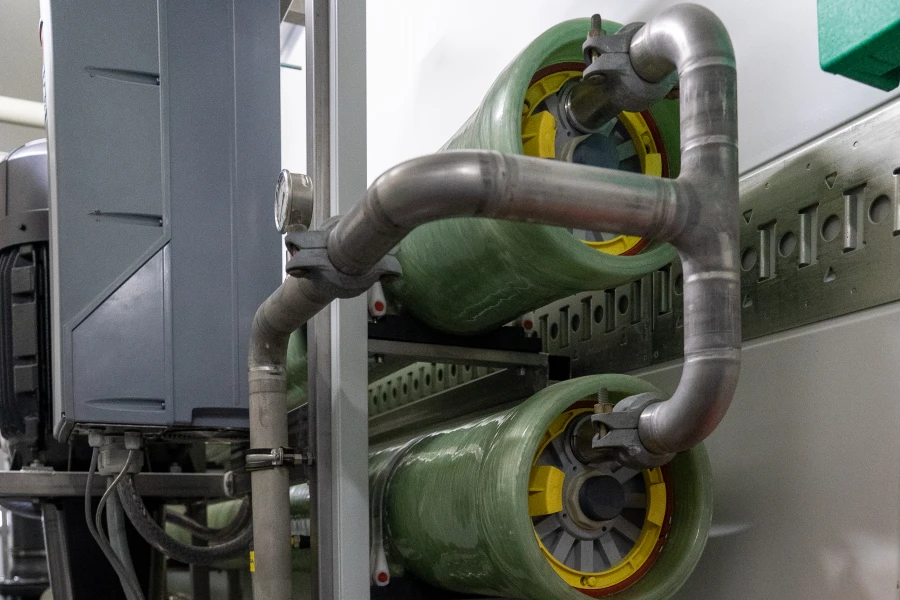
A moderate pH range ensures the formation of thin passive oxide films on steel and copper surfaces. These films prevent further dissolution of the metal, thereby reducing the corrosion rate. For steel, magnetite (Fe₃O₄) or hematite (Fe₂O₃) forms; for copper, copper(I) oxide (Cu₂O) forms. If the pH value is too low, this protective film dissolves, while at excessively high values, the film becomes brittle and porous.
Aluminum forms a natural aluminum oxide layer that is stable at pH values between 6 and 9. If the pH rises above this range, the oxide converts into hydroxides, which detach easily. Therefore, VDI 2035 and UWS limit the pH for aluminum-containing systems to a maximum of 9.0. For systems with stainless steel heat exchangers or copper pipes, the pH can extend up to 10.0, as these materials form a more stable passive layer.
Biofilms and bacteria also influence the pH value. Some types of bacteria produce organic acids, thereby lowering the pH value, while others form ammonia or sulfides, which can cause pH increases. In district heating networks operated with organic corrosion inhibitors, there is a risk that microbial degradation products decompose these inhibitors and release acids. The AquaConcept‑FAQ points out that pH regulating agents such as trisodium phosphate can be used when microorganisms lower the pH value. A comprehensive system analysis must therefore also include hygiene and biofouling aspects.
Adjusting the pH when filling a system is just the first step. During operation, the pH value can drift. Here are the main causes:
Experts therefore recommend not assessing the pH immediately after filling. VDI Guideline 2035 and professional practice stipulate that the pH value should only be assessed 8–12 weeks after filling to measure, because only then will a stable equilibrium be established. During this time, the system should only be minimally refilled and carefully vented to obtain a representative result.
Take samples
The use of ion exchangers is a central element of water treatment. Cartridges or stationary systems remove scale and dissolved salts. However, the ion exchange process affects the pH value: During demineralization hydrogen and hydroxide ions are formed, so that the treated water initially reacts neutral to slightly acidic. In practice, however, the pH is often increased by self-alkalization of the mixed-bed cartridges when the anion exchange resin absorbs carbonates.
To achieve a stable pH, manufacturers offer mixed-bed cartridges with pH-stabilizing resins . These bind carbonates and release alkalinity only within a narrow range. UWS points out that the ideal pH range can be set between 8.2 and 10.0 by using special mixed-bed resins. The regeneration of these regenerable resins is particularly sustainable: Instead of disposing of them, the resins can be regenerated in a closed loop. The user receives a replacement package while the spent resin is reprocessed. This reduces TCO and the ecological footprint.
If the pH value is too low despite correct treatment, then alkalizing agents can be used. Typical examples are Sodium hydroxide, Potassium hydroxide or ammonia solutions, which are particularly used in district heating networks for pH stabilization. These substances increase alkalinity, promote the formation of passive layers, and reduce corrosion. In saline operating conditions, a higher pH is often set because electrolytes would otherwise destabilize the oxide layer. However, dosing must be controlled, as over-alkalization leads to deposits and aluminum corrosion.
For systems with aluminum components, the use of pH-stable antifreeze agents or silicate-free corrosion inhibitors, which maintain the pH in the range of 8.2 – 9.0. Trisodium phosphate, as mentioned by AquaConcept in its FAQs, can serve to raise pH in cases of microbial pH drop. Phosphate simultaneously forms protective layers on steel, but is critical in combination with aluminum and should only be used there with manufacturer approval.
Some products combine alkalization with dispersion and oxygen scavengers. For example, they contain carboxylates, Borate or Molybdate, which form protective layers on metallic surfaces. The choice of inhibitor depends on the material mix, temperature, and conductivity. Therefore, always consult with the system manufacturer before dosing.
Degassing units remove dissolved oxygen, nitrogen, and CO₂ from the heating water. A vacuum degasser uses negative pressure to expel gases, thereby not only preventing pump noise but also maintaining a stable pH value. Since oxygen drives redox reactions, degassing reduces pH drift. Combined with magnetite separation (sludge collector), corrosion products are retained, and the water remains clear.
Filtration with microfilters removes particles that serve as nuclei for scale formation and catalyze chemical processes. Clean water reacts less with components and remains more pH stable. Operators should pay attention to a low pressure drop across the filters to avoid impairing pump performance. In mobile treatment plants, filters, degassing, and ion exchange can be combined to address emergencies or bridge revision downtimes.
A permanently stable pH value is achieved not only through chemicals but also through systemic thinking. Important elements include:
The Heizungsjournal emphasizes that inline desalination combined with automated pH regulation is particularly sustainable because the ion exchange resins are regenerable and the process runs without interruption. Such an approach reduces maintenance effort and minimizes resource consumption.
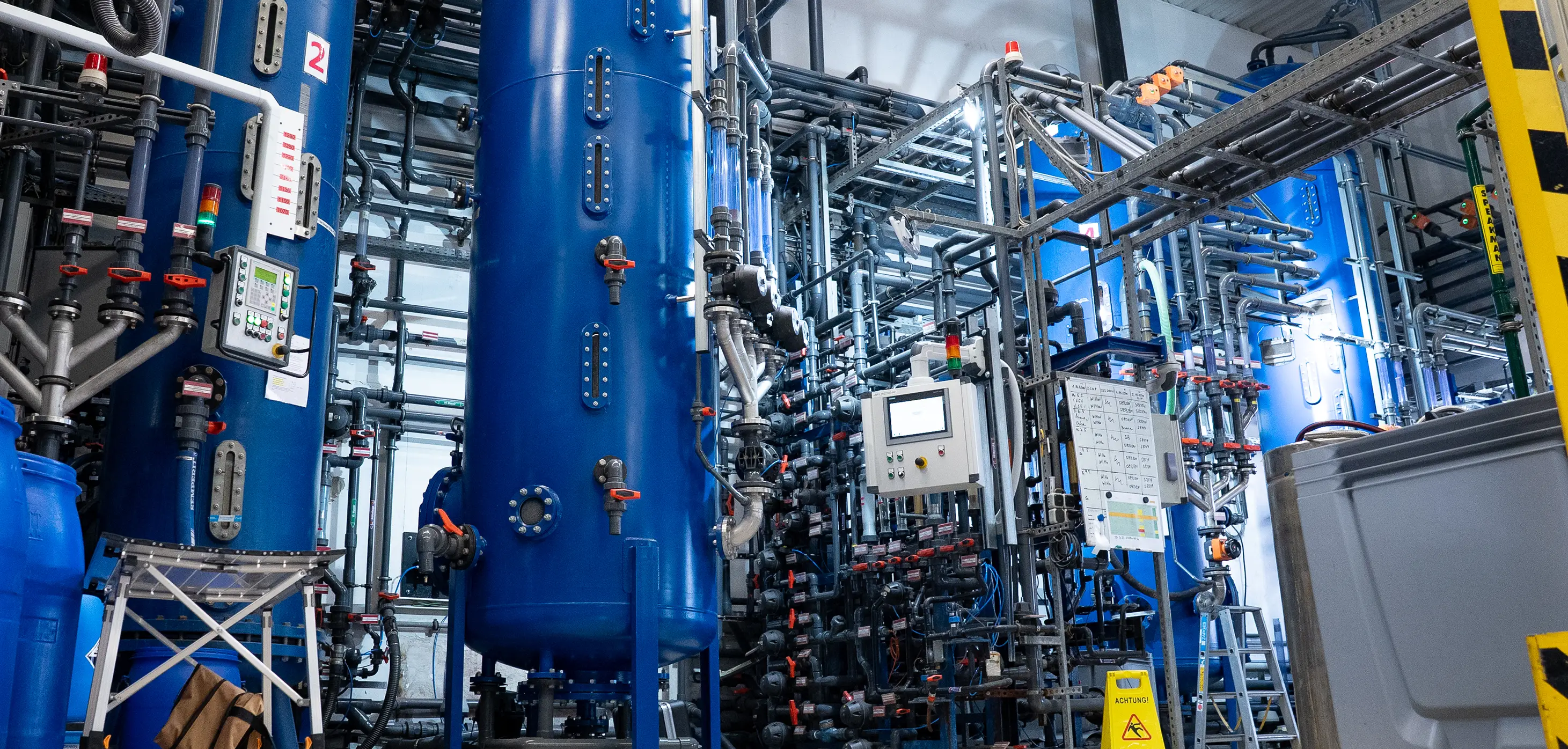
To set and maintain the pH value in a system in accordance with standards, the following procedure is recommended:
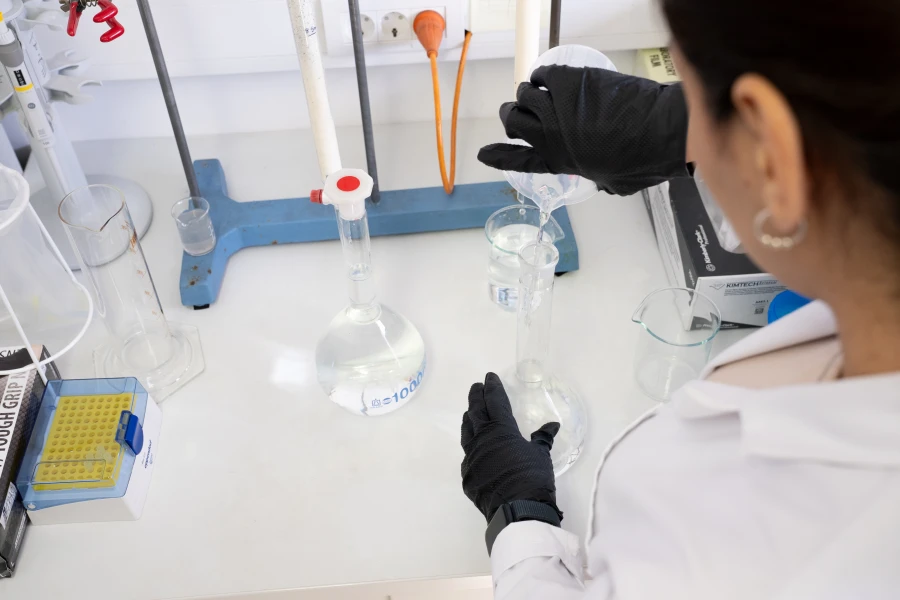
The energy transition demands ever-increasing efficiency and availability of heating networks and process plants. Simultaneously, environmental regulations and CO₂ reduction targets are becoming stricter. A well-adjusted pH value indirectly contributes to decarbonization: it prevents scale, which increases energy consumption, and avoids corrosion damage that requires resource-intensive repairs.
The Pure and Ultrapure Water Treatment for industries such as Hydrogen Electrolysis and Battery Cell Production is based on similar principles: minimal conductivity and defined pH values protect sensitive electrolyte cells. Experience from heating water treatment – such as resin regeneration and mobile supply with trailer systems – forms a basis for these future industries.
The concept of Mobile Water Treatment is also becoming more relevant: project companies use trailer systems to supply construction sites, renovations, and emergencies with quality-assured water. These mobile units often include integrated pH sensors, conductivity measurement, and dosing technology, allowing the operator to react immediately on-site. For operators of large heating networks, trailers offer additional Emergency and Project Capability, to quickly supply pH-stabilized water during disruptions or hydraulic modifications without jeopardizing the entire network.
The Sustainability is also a key focus. The use of Reusable Resin reduces waste and lowers environmental impact. Resins can be regenerated multiple times, which reduces lifecycle costs. In combination with efficient degassing units, energy-saving pumps, and digital monitoring systems, this creates a future-proof water treatment solution.
The pH value of heating water is not a minor detail, but a key factor for the safety, efficiency, and sustainability of modern heating and process systems. VDI 2035 and AGFW FW 510 provide the framework and define pH limit values depending on the material and operating method. For aluminum components, a narrower range of 8.2 – 9.0 applies, while steel and copper systems tolerate pH values between 8.2 – 10.0. District heating networks with saline operation may aim for pH values up to 10.5.
The causes of pH drift are diverse: degassing, corrosion, chemical degradation of additives, oxygen ingress, and microbial influence. An incorrect pH level can lead to acid corrosion, alkaline corrosion, scale formation and air problems. Therefore, operators should not only set the pH value once, but check it after 8–12 weeks, monitor it regularly, and analyze the causes of any deviations.
Effective measures include the ion exchange technology with pH-stable resins, the dosing of alkalizing agents and inhibitors, the Degassing and Filtration as well as a sustainable circular management. The combination of correct planning, plant-specific chemistry, and digital monitoring ensures that the pH remains within the target range and the system can be operated in compliance with standards and economically. Companies like ORBEN support operators with regenerable reusable resin systems, mobile trailer units, DI and ultrapure water solutions as well as expert advice. This way, the pH value in heating water transforms from a potential source of error into a manageable quality feature.


.svg)